.png.webp)
.png)
ในภาษาอังกฤษ การแยกความแตกต่างระหว่างการใช้ much และ many อาจสร้างความสับสนให้กับผู้เริ่มเรียนหรือผู้ที่ลืมพื้นฐาน ทั้งสองคำมีความหมายคล้ายกันในภาษาเวียดนาม แต่ใช้ในบริบทและน้ำเสียงของประโยคที่แตกต่างกัน แล้วการใช้ที่ถูกต้องของ many และ much คืออะไร? บทความนี้จะให้ความรู้พื้นฐานและตัวอย่างการใช้งานของแต่ละคำแก่คุณ
การเข้าใจ much และ many
สิ่งที่ทั้งสองมีเหมือนกัน:
-
ทั้งสองคำใช้เพื่อแสดง “ปริมาณมาก” ของบางสิ่ง
-
วางไว้หน้าคำนามหรือวลีคำนามเพื่อบอกจำนวน
ความแตกต่าง:
|
Much |
Many |
|
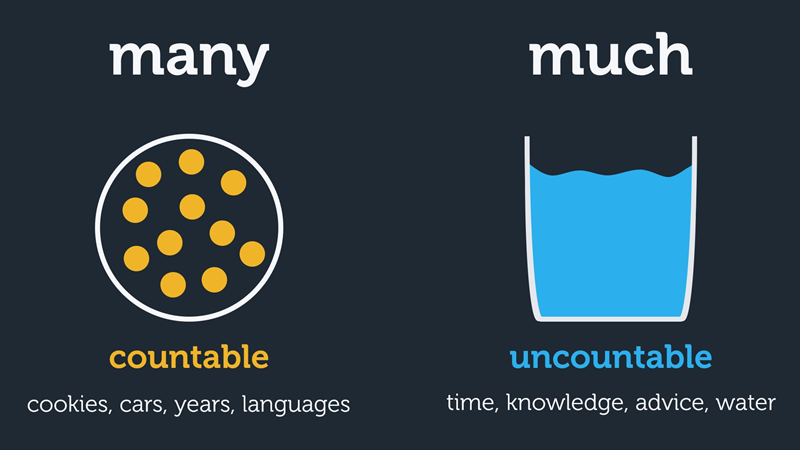
ใช้กับคำนามนับไม่ได้ |
ใช้กับคำนามนับได้พหูพจน์ |
|
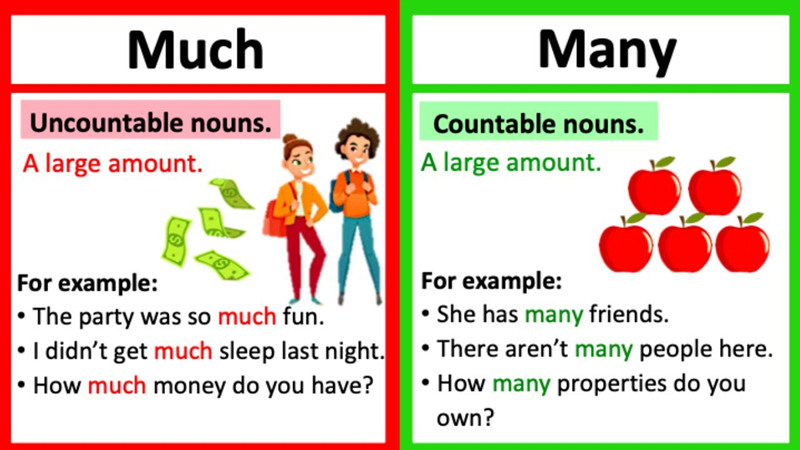
I don’t have much money. |
I have many good friends. |
|
มักใช้ในประโยคปฏิเสธหรือประโยคคำถาม |
ใช้ในประโยคบอกเล่าด้วย โดยเฉพาะในบริบทที่เป็นทางการ |
|
Does she have much experience? |
Many of his friends were surprised. |
กลุ่มคำ (Collocations):
Much สามารถสร้างเป็น:
-
Very much (adverb/adjective): I love Math very much.
-
Too much (excessive): He bought too much sugar.
-
So much (emphasis): The pollution was so much that no one could go out.
-
As much as (comparison): Nam earned as much money as you.
Many สามารถสร้างเป็น:
-
So many / very many / a great many: So many children like playing video games.
-
As many as (comparison): Nam reads as many books as I do.
-
In as many: He had two cars in as many years.
โครงสร้างการใช้ที่พบบ่อย
1. Much และ many + คำนาม
ไม่มีคำว่า “of” ระหว่างคำบอกปริมาณกับคำนาม: We don’t buy much perfume, but we buy many dresses.
ละคำนามได้เมื่อบริบทชัดเจน: Did you buy many clothes? - Not many.
2. Much และ many of + คำกำหนด (Determiner) + คำนาม
ใช้ “of” เมื่อมีคำกำหนดนำหน้า: much/many of + คำกำหนด (เช่น my, the, some) + คำนาม
ตัวอย่าง:
-
Much of Vietnam is mountainous.
-
How many of the students passed the exam?
3. คำถามที่ใช้ How much / How many
|
โครงสร้าง |
การใช้งาน |
ตัวอย่าง |
|
How much + คำนามนับไม่ได้? |
ใช้ถามปริมาณหรือราคา |
How much money do you have? |
|
How many + คำนามพหูพจน์? |
ใช้ถามจำนวน |
How many books do you have? |
|
สำหรับการถามราคา (ใช้เฉพาะ “how much” เพราะราคานับไม่ได้) |
How much does this bag cost? |
4. การเปรียบเทียบ (Making Comparisons)
การเปรียบเท่า (Equal comparison):
-
As much as (คำนามนับไม่ได้): He likes swimming as much as skiing.
-
As many as (คำนามพหูพจน์): Nam drinks as much coffee as Linh.
ระดับขั้นกว่า (Comparative degree): ใช้ more (หรือ much more เพื่อเน้น)
-
I drink more wine than you.
-
My skirt is much more expensive than hers.
ระดับขั้นสูงสุด (Superlative degree): ใช้ the most (สามารถเพิ่มคำเน้นได้ เช่น much / by far)
-
She is the most beautiful girl in class.
-
He’s by far the most intelligent in class.
แบบฝึกหัด (Practice Exercises)
แบบฝึกหัดที่ 1: เติมคำว่า “much” หรือ “many”
-
I haven’t got ____ time.
-
There are so ____ people here.
-
Did you spend ____ money?
-
We didn’t buy ____ presents.
-
____ students have financial problems.
-
There was ____ bad driving.
-
Do you eat ____ fruit?
-
There was so ____ traffic.
-
You made too ____ mistakes.
-
You can’t see ____ of a country on one trip.
แบบฝึกหัดที่ 2: แก้ไขข้อผิดพลาด (Correct the errors)
-
We didn’t spend many time on Christmas.
-
Did you take much photographs on holiday?
-
The tickets cost too many.
-
How many butter did you add?
-
My father drinks many coffee.
-
We get much rain, but not many storms.
-
We haven’t got some bread.
-
They’ve got so lots of money.
-
I take photos, but not as many as I used to.
คำที่สามารถใช้แทน much และ many ได้
คุณสามารถใช้คำบอกปริมาณอื่นแทน much และ many ได้บ่อยครั้ง เช่น
-
Many -> a lot of / lots of / plenty of / a large number of
-
Much -> a great deal of / a lot of / plenty of
ตัวอย่าง:
-
I have many friends -> I have a lot of friends.
-
She can’t drink much beer -> She can’t drink lots of beer.
Monkey Junior - เส้นทางการเรียนรู้ภาษาอังกฤษที่ครอบคลุมสำหรับเด็ก
Monkey Junior เป็นแอปพลิเคชันเพื่อการเรียนรู้ภาษาอังกฤษพื้นฐานที่ออกแบบมาสำหรับเด็กอายุ 0-11 ปี เด็กจะได้เรียนรู้คำศัพท์ง่าย ๆ ที่ใช้บ่อยในชีวิตประจำวันผ่านภาพ เสียง และเกมสุดน่ารัก ทุกบทเรียนมีระยะเวลาสั้นเพียง 3-7 นาที เพื่อให้เหมาะกับสมาธิของเด็กแต่ละวัย ระบบจะช่วยให้เด็กเข้าใจและจดจำคำศัพท์ได้อย่างเป็นธรรมชาติ
แอปนี้ใช้เทคโนโลยี AI ตรวจจับเสียงพูดเพื่อประเมินการออกเสียงของเด็ก ช่วยให้เด็กพูดได้เหมือนเจ้าของภาษา นอกจากนี้ยังมีระบบรางวัลและสติกเกอร์เพื่อสร้างแรงจูงใจในการเรียน เด็ก ๆ จะรู้สึกว่าการเรียนภาษาอังกฤษไม่ใช่เรื่องยาก แต่เป็นการผจญภัยที่สนุกทุกวัน
การรู้ว่าเมื่อใดควรใช้ much และ many เป็นสิ่งสำคัญในการใช้ภาษาอังกฤษอย่างถูกต้อง ใช้กฎที่กล่าวไว้ข้างต้นเป็นแนวทางในการฝึกฝนและเพิ่มความแม่นยำในการเขียนและการพูด เมื่อคุณเชี่ยวชาญการใช้คำบอกปริมาณ คุณจะสามารถสร้างประโยคที่ชัดเจนและลื่นไหลมากขึ้น