.png.webp)



.png)
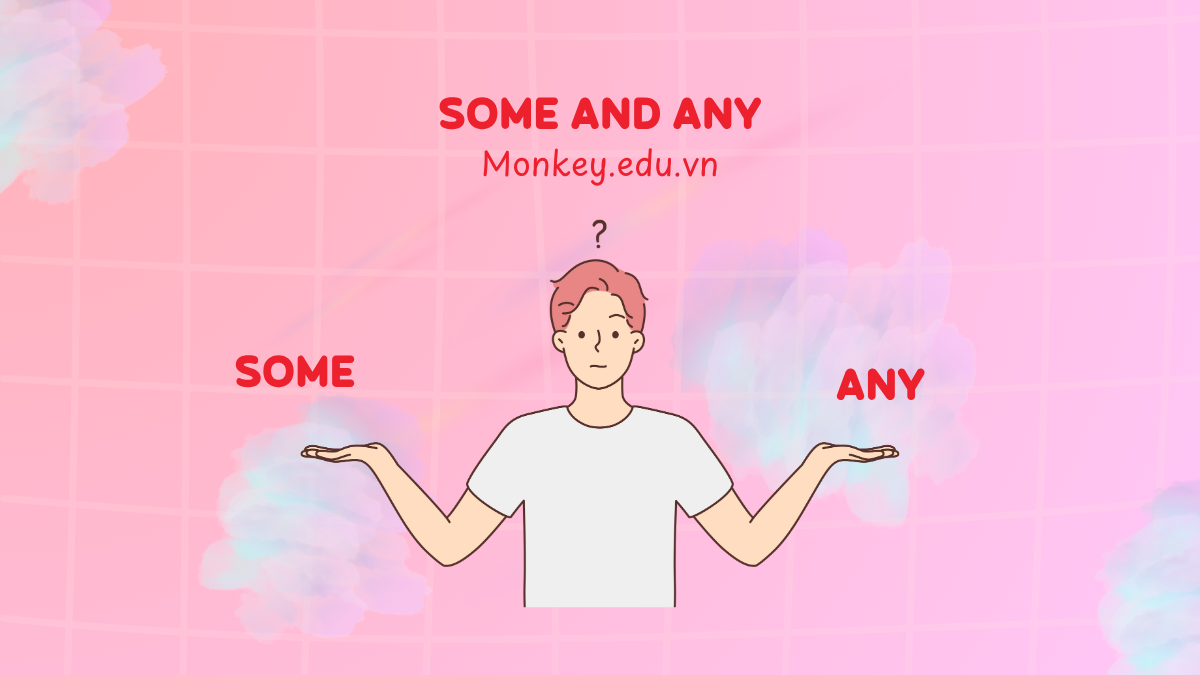
การใช้ some และ any อาจสร้างความสับสน โดยเฉพาะสำหรับผู้เริ่มเรียนภาษาอังกฤษ แม้ว่าทั้งสองคำจะสามารถใช้กับคำนามนับได้และคำนามนับไม่ได้ และมีความหมายว่า “บางส่วน” แต่การใช้งานของมันแตกต่างกัน มาดูความแตกต่างระหว่าง some และ any ด้านล่างนี้กัน!
วิธีใช้ some
คำว่า some มักใช้ในประโยคบอกเล่า เพื่อสื่อความหมายว่า “บางส่วน” หรือ “เล็กน้อย” เมื่อจำนวนที่แน่นอนไม่สำคัญหรือไม่ทราบแน่ชัด
สามารถใช้ได้ทั้งกับคำนามนับได้และนับไม่ได้ และยังใช้ในประโยคขอหรือเสนออย่างสุภาพอีกด้วย ต่อไปนี้คือการใช้ที่พบบ่อย 6 แบบ:
1. ประโยคบอกเล่า (Affirmative sentences)
-
I can buy some books.
-
There are some apples in the fridge.
-
I need some water right now.
-
She listened to some music last night.
2. ข้อเสนอหรือคำขออย่างสุภาพ (Polite offers and requests)
-
May I have some shirts, please?
-
Could you please buy me some oranges?
-
Would you like some milk with your black coffee?
3. คำถามที่คาดว่าจะได้คำตอบว่า “Yes” (Questions expecting a “Yes” answer)
-
Did you buy some vegetables?
-
Do you have some romantic books at home?
-
Can you give me some money?
4. some + ปริมาณ = ประมาณ (Some + amount = approximately)
-
I bought some 3 kilograms of meat.
-
There are some 30 people in my class.
-
Some girls are wearing makeup for the party.
5. ใช้เน้นหรือแสดงความไม่พอใจเมื่อตั้งต้นประโยค (Emphasis or exasperation when placed at the start)
-
Some idiot locked the door!
6. คำที่มักใช้ร่วมกับ some (Common compounds):
-
sometimes, something, someone, somewhere
-
I sometimes go out with friends.
-
You can do something if you need.
-
I received this gift from someone.
-
I will travel somewhere next year.
วิธีใช้ any
คำว่า any สามารถใช้กับคำนามนับได้และคำนามนับไม่ได้เช่นเดียวกับ some และ any แต่โดยทั่วไปจะพบได้ในประโยคปฏิเสธ คำถาม หรือประโยคบอกเล่าที่สื่อถึง “ตัวเลือกไม่จำกัด” (เช่น ความหมายของคำว่า “any”)
1. ประโยคปฏิเสธ (Negative sentences)
-
There are not any people in my class.
-
I don’t have any pens.
-
There isn’t any food left at home.
-
He doesn’t drink any juice.
2. คำถามที่ถามว่ายังเหลืออยู่หรือไม่ (Questions asking if something remains)
-
Are there any people at school at 6 p.m.?
-
Are there any red dresses in the store?
-
Do you have any money?
3. ประโยคบอกเล่าที่มีความหมาย “ไม่มีเลย” หรือ “ตัวเลือกไม่จำกัด” (Affirmative sentences meaning “none” or indicating unlimited choice)
-
My sister never did any homework.
-
If you want to make any cakes, I will help.
-
My mother hardly does any morning exercise.
-
I don’t know whether he has any money.
4. ใช้ร่วมกับคำที่มีความหมายว่า “ไม่...เลย” เช่น avoid, prevent, forbid (With words like avoid, prevent, forbid meaning “no … at all”)
-
Avoid any mistakes in the exam.
-
The law forbids any illegal crossing.
-
My friend advised me not to love him to prevent any heartbreak.
5. คำที่มักใช้ร่วมกับ any (Common compounds):
-
anyway, anything, anyone, anywhere, anytime
-
I will finish my homework anyway.
-
Tell me if you want anything here.
-
He reads anytime.
-
I will not travel anywhere without friends.
-
If she is single at 30, she will marry anyone her mother wants.
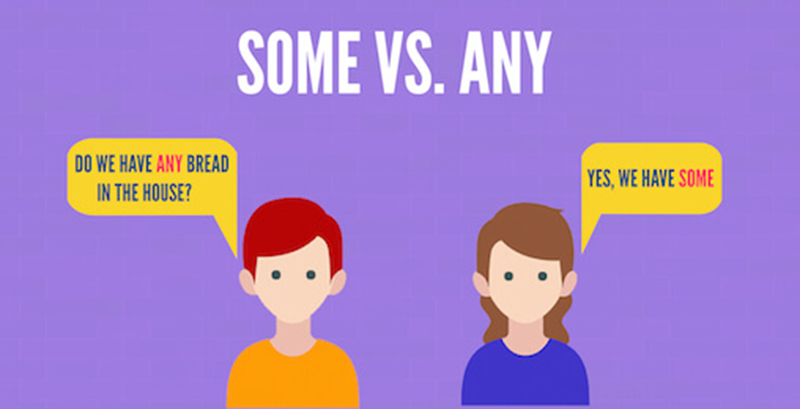
ความแตกต่างระหว่าง some และ any
|
ความเหมือนกัน |
ความแตกต่าง: some |
ความแตกต่าง: any |
|
ทั้ง some และ any สามารถใช้กับคำนามนับได้หรือคำนามนับไม่ได้ เพื่อแสดงถึง “ปริมาณบางส่วน” |
ใช้ในประโยคบอกเล่าและคำเสนออย่างสุภาพ เพื่อสื่อความหมายว่า “บางส่วน” หรือ “เล็กน้อย” |
ใช้ในประโยคปฏิเสธและคำถาม เพื่อแสดงความหมายว่า “ไม่มีเลย” หรือ “ไม่จำกัดตัวเลือก” |
|
You left some books on the table. |
Some children are swimming in the lake. |
There is not any fruit in the fridge. |
|
Would you like some juice? |
Do you have any money? |
เคล็ดลับ: หากประโยคมีคำนามที่ถูกกำหนดไว้แล้ว สามารถใช้เพียง some หรือ any โดยไม่ต้องกล่าวซ้ำคำนามนั้นอีก
-
If he wants meat for the meal, he can buy some.
-
I need to relax with some good songs, but I can’t find any.
ข้อผิดพลาดที่พบบ่อยที่ควรหลีกเลี่ยง
การสับสนระหว่าง some และ any
-
Would you like some vegetables? (some = a few)
-
You can choose anything. (any = unlimited choices)
การสับสนระหว่าง “any ideas” กับ “any idea”
-
ใช้ถามความคิดเห็น: Do you have any ideas?
-
ใช้ถามเหตุผลเฉพาะ: Do you have any idea why...?
การใช้ any ผิดในประโยคตอบกลับ
-
ห้ามตอบว่า “No, any.”
-
ถูกต้องคือ: No, I have no rings.
-
อย่าพูดว่า: Anyone lends me money.
-
ควรพูดว่า: No one lends me money.
การใช้ผิดระหว่าง some/any กับ a/an
-
Mary is eating an apple. (one apple)
-
Mary is eating some apples. (a few apples)
การใช้ให้ตรงกับประธาน–กริยา
-
Someone says...
-
Any food is enough.
-
Some schools are international schools.
แบบฝึกหัดการใช้ some และ any
แบบฝึกหัดที่ 1: เติม some หรือ any
-
We didn't buy____ flowers.
-
Tonight I'm going out with____ friends of mine.
-
Have you seen____good movies recently?
-
I’d like____ information about what there is to see in this town.
-
I didn’t have ____ money. I had to borrow ____
-
You can use your card to withdraw money at____ cash machine.
-
Those apples look nice. Shall we get ____?
-
“Can I have ____ more coffee, please?” “Sure. Help yourself.”
-
If there are ____words you don’t understand, look them up in a dictionary.
-
We wanted to buy____ grapes, but they didn’t have ____ in the shop
แบบฝึกหัดที่ 2: เติม ___body/_thing/_where
-
There's ____at the door. Can you go and see who it is?
-
Dose____mind if I open the window?
-
I can't drive and I don't know ____about cars.
-
You must be hungry. Why don't I get you____to eat?
-
Emma is very tolerant. She never complains about____
-
There was hardly____ on the beach. It was almost deserted.
-
Let's go away. Let's go____ warm and sunny.
-
I'm going out now. If ____asks where I am, tell them you don't know.
-
This is a no-parking area____who park their car here will have to pay a fine.
-
Quick, let's go! There's____coming and I don't want____ to see us.
-
Jonathan stood up and left the room without saying____.
-
“Can I ask you____?” “Sure. What do you want to ask?"
-
Sarah was upset about____ and refused to talk to____.
-
I need____ to translate. Is there____ here who speaks English?
-
Sue is very secretive. She never tells ____ ____ (2 words)
-
She was too surprised to say___

คำตอบ บทเรียนที่ 1:
-
any - ประโยคปฏิเสธใช้ any
-
some - ประโยคบอกเล่าใช้ some เพื่อสื่อความหมาย “เล็กน้อย”
-
any - ประโยคคำถามใช้ any
-
some - แปลว่า “ฉันต้องการข้อมูลบางอย่างเกี่ยวกับสถานที่ท่องเที่ยวในเมืองนี้”
-
any…some - ประโยคแรกเป็นปฏิเสธใช้ any / ประโยคหลังเป็นบอกเล่าใช้ some
-
any - “คุณสามารถใช้บัตรของคุณกดเงินสดได้ที่เครื่อง ATM ใดก็ได้”
-
some - คำถามคาดหวังคำตอบ “ใช่” ใช้ some
-
some - เช่นเดียวกัน คำถามคาดคำตอบ “ใช่” ใช้ some
-
any - “ถ้ามีคำใดที่คุณไม่เข้าใจ ให้เปิดพจนานุกรมดู”
-
some…any - ส่วนแรกเป็นบอกเล่าใช้ some / ส่วนหลังเป็นปฏิเสธใช้ any
คำตอบ บทเรียนที่ 2:
-
somebody/someone - ใช้ some เพราะบริบทบ่งบอกว่ามีคนอยู่ที่นั่นแล้ว
-
anybody/anyone - เป็นคำถามจึงใช้ any
-
anything - เป็นประโยคปฏิเสธจึงใช้ any
-
something - “คุณคงหิวมาก ฉันจะหาอะไรให้กินไหม”
-
anything หรือ anybody/anyone - “เธอไม่เคยบ่นเรื่องใดเลย”
-
anybody/anyone - มีคำว่า “hardly” เป็นปฏิเสธ จึงใช้ any
-
somewhere - “ไปที่ที่อบอุ่นและมีแดดกันเถอะ”
-
anybody/anyone - “ถ้ามีใครถามว่าฉันอยู่ไหน บอกว่าไม่รู้”
-
anybody/anyone - “พื้นที่นี้ห้ามจอดรถ ใครจอดจะต้องเสียค่าปรับ”
-
somebody/someone….anybody/anyone - “มีคนกำลังมา และฉันไม่อยากให้ใครเห็นเรา”
-
anything - ประโยคมี “without” เป็นเชิงปฏิเสธ ใช้ any
-
something - เป็นคำถามคาดคำตอบ “ใช่” ใช้ some
-
something….anybody/anyone - “Sarah ไม่พอใจบางคนและไม่ยอมพูดกับใครเลย”
-
somebody/someone….anybody/anyone - “ฉันต้องการคนแปลภาษา มีใครพูดภาษาอังกฤษได้ไหม”
-
anybody/anyone_anything - “เธอจะไม่บอกใครอะไรเลย”
-
anything - “เธอตกใจจนพูดไม่ออกเลย”
Monkey Junior - เส้นทางการเรียนรู้ภาษาอังกฤษที่ครอบคลุมสำหรับเด็ก
Monkey Junior เปิดโอกาสให้เด็กได้เรียนรู้ภาษาอังกฤษจากคำง่าย ๆ ไปจนถึงประโยคพื้นฐานในชีวิตประจำวัน ผ่านกิจกรรมที่หลากหลาย เด็กจะได้ฝึกฟังและพูดกับเสียงเจ้าของภาษาโดยตรง พร้อมเรียนรู้การอ่านและการเขียนจากเกมแบบอินเทอร์แอกทีฟ แอปนี้ช่วยให้เด็กเข้าใจภาษาอังกฤษด้วยวิธีที่เป็นธรรมชาติที่สุด
ด้วยบทเรียนกว่า 4,000 บทและคำศัพท์กว่า 3,000 คำ เด็กจะค่อย ๆ พัฒนาทักษะภาษาอังกฤษครบทั้งสี่ด้าน แอปยังมีระบบรายงานผลให้ผู้ปกครองติดตามความก้าวหน้าได้ง่าย Monkey Junior ไม่เพียงสอนภาษาอังกฤษ แต่ยังปลูกฝังความมั่นใจให้เด็กกล้าใช้ภาษาในชีวิตจริง
บริบทของประโยคนี้คือเธอสามารถพูดอะไรก็ได้ที่เธอต้องการ ดังนั้นจึงไม่มีการจำกัดจำนวน ดังนั้นเราจึงใช้คำว่า Any คู่มือนี้ให้กฎการใช้งานที่ชัดเจนสำหรับ some และ any แสดงข้อผิดพลาดที่พบบ่อย และมีตัวอย่างเพื่อเสริมการเรียนรู้ ด้วยการฝึกฝนอย่างระมัดระวัง คุณจะหลีกเลี่ยงข้อผิดพลาดทั่วไปและสามารถใช้ตัวบ่งชี้ปริมาณสำคัญเหล่านี้ได้อย่างมั่นใจ