

.png)
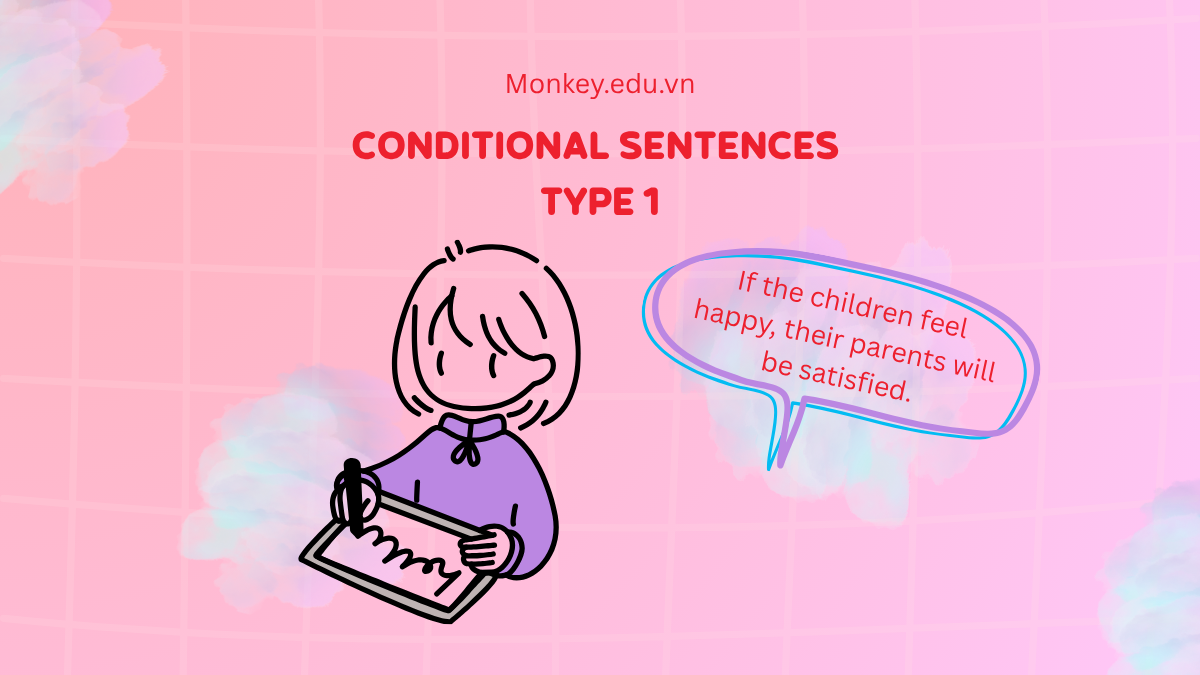
Conditional sentences type 1 (also known as First Conditional) are essential in English grammar, used to talk about real or possible future situations and their results. This guide will help learners understand the definition, grammar structure, uses, common variations, and tips with examples to fully master conditional sentences type 1 in everyday communication and academic contexts.
What are conditional sentences type 1?
Conditional sentences are grammatical structures used to show a relationship between a condition and its possible result. They help speakers express cause-and-effect situations in a clear, predictable way. Each conditional type reflects a different level of possibility.
Type 1 conditionals describe real and possible future situations that may happen if a certain condition is fulfilled. They rely on present facts or realistic predictions, making them common in everyday speech, advice, warnings, and planning. This structure is practical because it connects a current condition with a likely future outcome.
Compared with other types, Type 0 expresses general truths or routines that always happen. Type 2 shows unreal or unlikely situations in the present, while Type 3 refers to impossible outcomes in the past. Type 1 sits between these forms, focusing on future results that are realistically achievable.
Examples:
-
If it rains tomorrow, we will cancel the trip.
-
If you study regularly, you will improve your test scores.
-
If she leaves now, she will arrive before sunset.
-
If they offer a discount, more people will join the course.
-
If he doesn’t hurry, he will miss the meeting.
Grammar structure
Basic formula
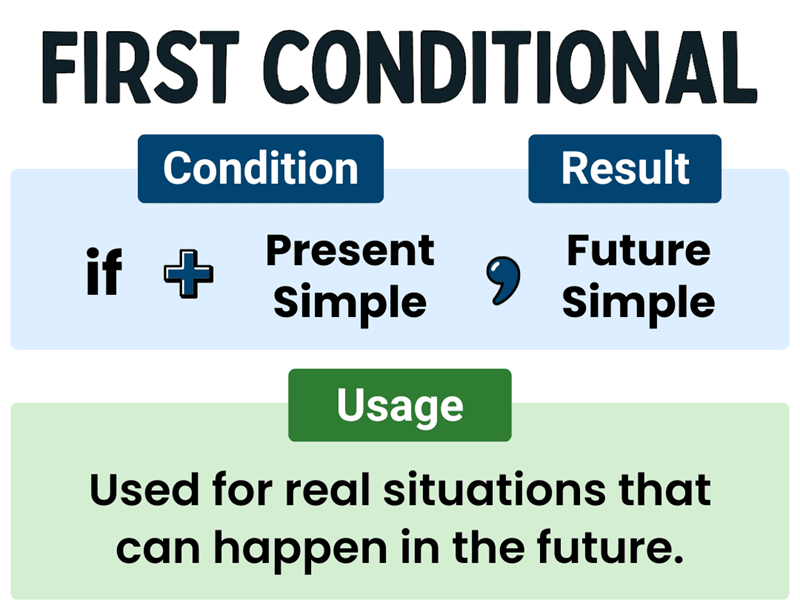
Structure: If + present simple, … will + base verb.
This formula links a present condition with a likely future result. The if clause presents the situation, while the main clause predicts what will happen next. This structure is the most common and direct way to express real future possibilities.
Word order and punctuation
Structure: If clause + comma + main clause / Main clause + if clause (no comma).
When the sentence starts with the if clause, a comma is required to clearly separate the two parts. If the main clause appears first, the sentence reads smoothly without a comma. Both forms are correct and can be used interchangeably depending on emphasis.
Negative and question forms
Negative: If + subject + do/does not + base verb, … will not (won’t) + base verb.
Negative Type 1 sentences show outcomes that will not happen unless the condition changes. The negation can appear in the if clause, the main clause, or both.
Question: Will + subject + base verb + if + present simple?
To form questions, invert will and the subject in the main clause to ask about possible future results. This pattern helps confirm expectations or check conditions before making decisions.
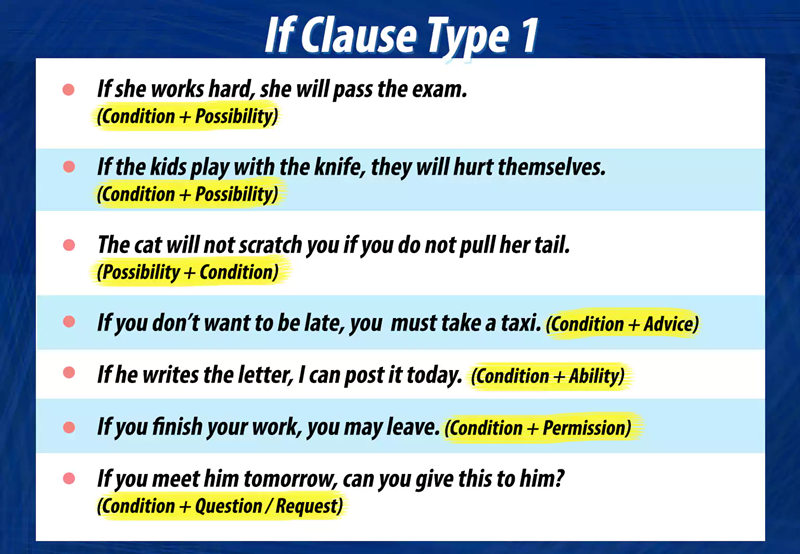
When & why we use conditional type 1
Real future possibilities
Conditional Type 1 is used to describe future situations that are likely to happen when a specific condition is fulfilled. It reflects real outcomes based on present facts or decisions. This makes it especially useful for predictions, planning, and everyday communication.
Suggestions and offers
Type 1 can be used to give suggestions or make offers by linking a condition to a helpful or supportive result. This structure allows the speaker to encourage actions with a clear future benefit.
Example sentences:
-
If you want, I will help you finish the project.
-
If you join us, we will save you a seat.
-
If you need advice, I will show you what to do.
Warnings and promises
Conditional Type 1 is effective for warnings because it connects a present action with a potential negative consequence. It can also express promises by showing a positive result that will happen if the condition is met. This helps the speaker communicate certainty and responsibility in future actions.
|
Give your child a strong English foundation from the very beginning with Monkey Junior. Start learning through fun games, native audio, and smart AI tools–perfect for kids aged 0-11. Help them build real skills in listening, speaking, reading, and writing step by step. Download Monkey Junior today and watch your child grow in confidence and English ability.
|


Conditional sentences type 1 vs other types
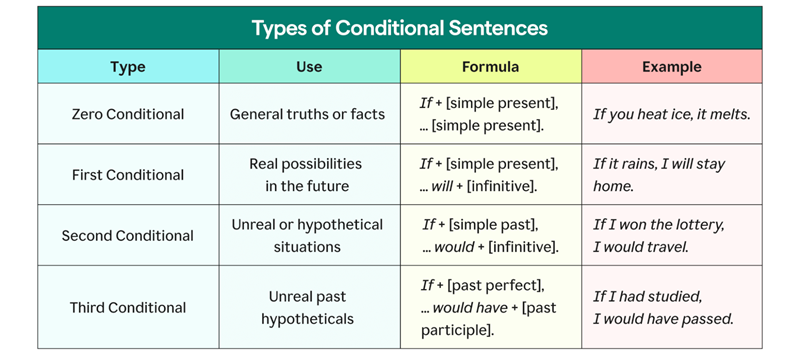
Comparison table:
|
Conditional Type |
Structure |
Meaning |
Level of Possibility |
Example |
|
Type 0 |
If + present simple, present simple |
General truths and habits |
Always true |
If you heat ice, it melts. |
|
Type 1 |
If + present simple, will + base verb |
Real future possibilities |
Likely or possible |
If it rains, we will stay home. |
|
Type 2 |
If + past simple, would + base verb |
Unreal or unlikely present situations |
Low possibility |
If I had time, I would travel more. |
|
Type 3 |
If + past perfect, would have + past participle |
Unreal past situations |
Impossible (past event already fixed) |
If she had called, I would have answered. |
Type 1 is the best choice when the condition describes something that can realistically happen in the future. It is used when the speaker believes the outcome is possible, based on current circumstances or decisions. Choose Type 1 instead of Type 0, 2, or 3 when you want to focus on likely future results, not general facts, hypothetical situations, or past regrets.
Conditional sentences type 1 are a key grammar point for anyone learning English, because they let speakers describe likely future outcomes based on conditions. By mastering the structure, uses, variations, and common mistakes reviewed in this guide, learners can significantly improve their accuracy and confidence in both written and spoken English. Consistent practice with real examples will help make this grammar point natural and automatic in everyday use.