.png)
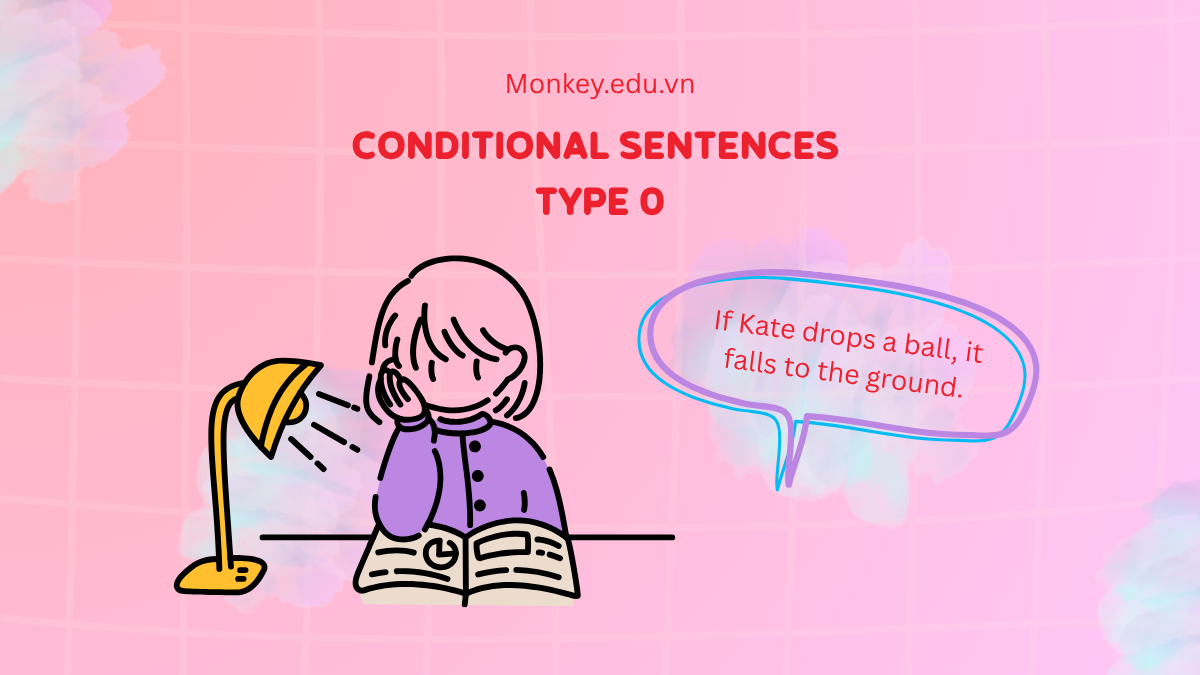
Conditional sentences type 0 are essential structures used to express general truths, scientific facts, and repeated behaviors. They help learners understand how cause-and-effect relationships work in English. Mastering zero conditional sentences strengthens your grammar foundation and improves clarity in everyday communication.
What are conditional sentences?
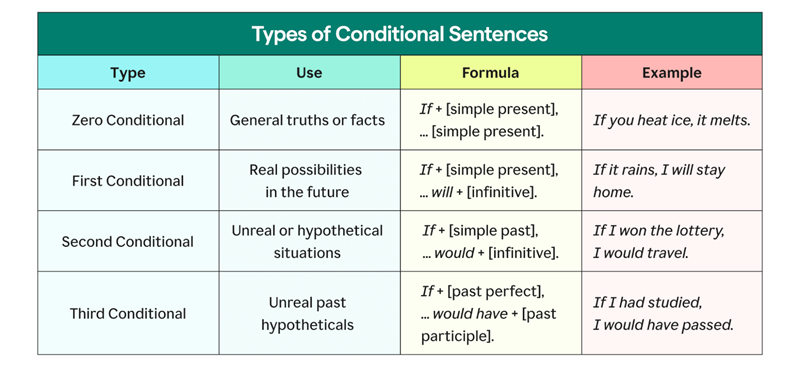
Conditional sentences are grammatical structures that show a cause-and-effect relationship between two actions. They usually consist of an if-clause (condition) and a result clause (outcome).
Different types of conditional sentences exist to express various degrees of reality or possibility. The main categories include Type 0, Type 1, Type 2, Type 3, and mixed conditionals.
Examples:
-
If you heat water to 100°C, it boils.
-
If it rains, the ground gets wet.
-
If I study hard, I pass the exam.
Zero conditional (type 0) explained
Definition
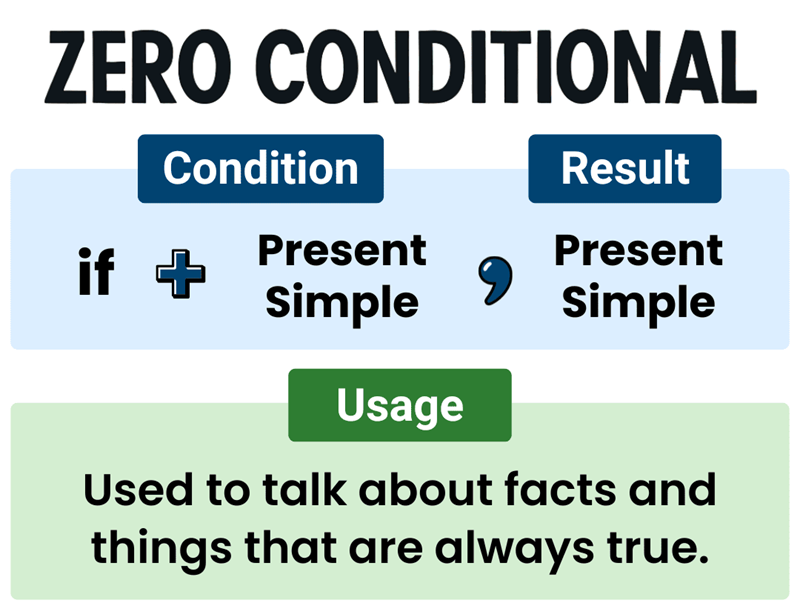
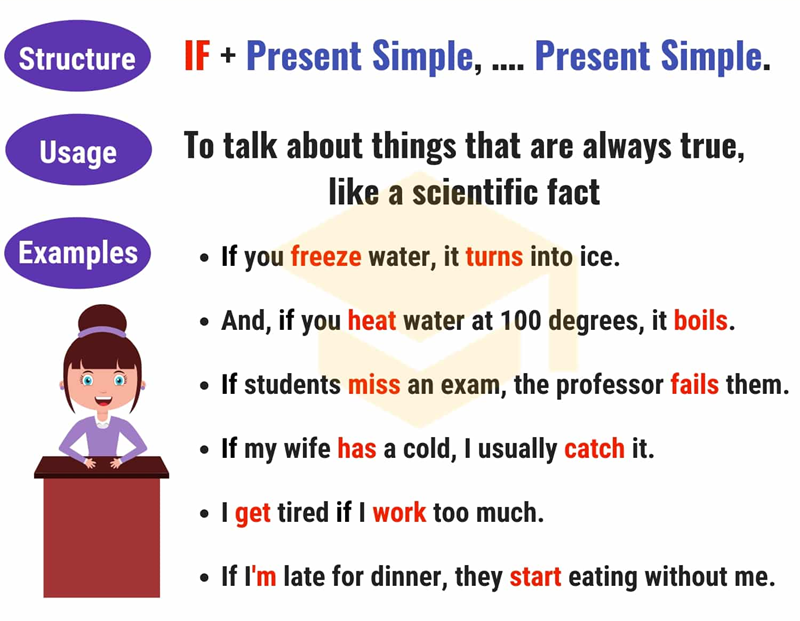
Zero conditional sentences express general truths, scientific facts, and actions that happen repeatedly in the same conditions. They show outcomes that are always predictable whenever the cause occurs. Because of this consistency, the zero conditional is considered one of the most straightforward conditional forms.
Structure
Structure: If + present simple, present simple.
This form shows a fixed cause-and-effect relationship that remains true every time the condition happens. The clauses may be reversed without changing the meaning, as long as both stay in the present simple tense.
When to use type 0
This structure is commonly used to talk about scientific principles and natural laws that are always valid. It also describes routines and habits that repeat under the same conditions. Additionally, the zero conditional is often used in instructions or rules to show what happens when a specific action is taken.
Examples:
-
If you heat ice, it melts.
-
If I feel tired, I take a short break.
-
If the alarm rings, you leave the building.
Variations and common mistakes
Replace “if” with “when/whenever”
In zero conditional sentences, when and whenever can replace if without changing the meaning, because the result always happens under the same condition. These alternatives highlight the idea that the outcome is guaranteed rather than possible. Learners often choose between them based on tone and emphasis, not grammatical difference.
-
Correct: When you heat water, it boils.
-
Incorrect: When you will heat water, it will boil.
Common errors in tense usage
A frequent mistake is using the future tense in the result clause, even though zero conditionals always require the present simple in both clauses. Some learners also mix tenses unintentionally, which breaks the rule of expressing universal truths. Keeping both verbs in the present simple ensures accuracy and consistency.
-
Correct: If you press this button, the machine starts.
-
Incorrect: If you press this button, the machine will start.
|
Give your child a strong English foundation from the very beginning with Monkey Junior. Start learning through fun games, native audio, and smart AI tools–perfect for kids aged 0-11. Help them build real skills in listening, speaking, reading, and writing step by step. Download Monkey Junior today and watch your child grow in confidence and English ability.
|


Practice exercises about conditional sentences type 0
Fill in the verbs in the present simple tense to complete the zero conditional sentences:
-
If you heat metal, it __________ (expand).
-
If plants don’t get water, they __________ (die).
-
When you mix yellow and blue, you __________ (get) green.
-
If people exercise regularly, they __________ (feel) healthier.
-
If you freeze water, it __________ (turn) into ice.
-
When it rains, the ground __________ (get) wet.
-
If children eat too much sugar, they __________ (have) tooth problems.
-
If you drop something heavy, it __________ (fall) quickly.
-
When I wake up early, I __________ (drink) tea.
-
If you heat ice too long, it __________ (melt).
-
When you press this button, the machine __________ (start).
-
If students don’t study, they __________ (forget) the lesson.
-
If you touch fire, it __________ (burn) you.
-
When you add salt to soup, it __________ (taste) better.
-
If the temperature rises, the snow __________ (melt).
-
When cats feel safe, they __________ (purr).
-
If you boil eggs too long, they __________ (turn) hard.
-
When people eat breakfast, they __________ (have) more energy.
-
If you don’t lock the door, someone __________ (steal) your things.
-
When the sun sets, it __________ (get) dark.
Answers:
-
expands
-
die
-
get
-
feel
-
turns
-
gets
-
have
-
falls
-
drink
-
melts
-
starts
-
forget
-
burns
-
tastes
-
melts
-
purr
-
turn
-
have
-
steals
-
gets
Conditional sentences type 0 provide a simple but powerful way to describe universal facts and habitual actions. By understanding the structure and practicing regularly, you can use zero conditional sentences naturally and accurately. Keep applying these patterns in daily contexts to enhance your English fluency.