.png.webp)



.png)
Subordinating conjunctions เป็นประเด็นไวยากรณ์ที่พบได้บ่อย คำเชื่อมเหล่านี้ช่วยเชื่อมโยงความคิดให้ชัดเจน โดยเฉพาะเมื่อเขียนประโยคที่ซับซ้อน เนื่องจากมีหลายประเภทของ subordinating conjunctions การเข้าใจโครงสร้างและการใช้งานของมันจึงเป็นสิ่งสำคัญในการพัฒนาทักษะการสื่อสารภาษาอังกฤษในชีวิตประจำวัน
ในบทความนี้ Monkey จะช่วยให้คุณเข้าใจว่า subordinating conjunctions คืออะไร มันทำงานอย่างไร และวิธีใช้ให้ถูกต้องในประโยคภาษาอังกฤษ อย่าลืมทดสอบความเข้าใจของคุณด้วยแบบฝึกหัดในตอนท้าย!
Subordinating conjunctions คืออะไร?
Subordinating conjunctions คือคำหรือวลีที่เชื่อมประโยคหลัก (independent clause) เข้ากับประโยครอง (dependent clause) โดยประโยครองไม่สามารถอยู่ได้ด้วยตัวเองและต้องเชื่อมกับประโยคหลักเพื่อให้มีความหมายสมบูรณ์ คำเชื่อม subordinating conjunction จะอยู่ต้นประโยครองเสมอ
ตัวอย่าง:
-
This suitcase will not lock because it is too full.
-
While there is life, there is hope.
-
Drink whenever you feel thirsty during exercise.
ประโยชน์ของการใช้ subordinating conjunctions
-
สร้างประโยคที่ซับซ้อนได้อย่างง่ายดาย: subordinating conjunctions ทำหน้าที่เป็นสะพานเชื่อมระหว่างความคิด ช่วยให้คุณเขียนประโยคที่มีความซับซ้อนและหลากหลายมากขึ้น ซึ่งเป็นสิ่งที่มีค่ามากในการสอบเขียนภาษาอังกฤษ
-
แสดงความสัมพันธ์ของเหตุและผลได้อย่างชัดเจน: คำเชื่อมเหล่านี้ช่วยให้คุณสื่อถึงความเชื่อมโยงระหว่างเหตุผลและผลลัพธ์ได้อย่างมีประสิทธิภาพ
-
พัฒนาทักษะการสื่อสารและการเขียน: เมื่อใช้ subordinating conjunctions ได้อย่างถูกต้อง จะช่วยเพิ่มประสิทธิภาพของทั้งการพูดและการเขียนภาษาอังกฤษ ทำให้คุณสามารถถ่ายทอดความคิดได้อย่างชัดเจนและมีเหตุผล
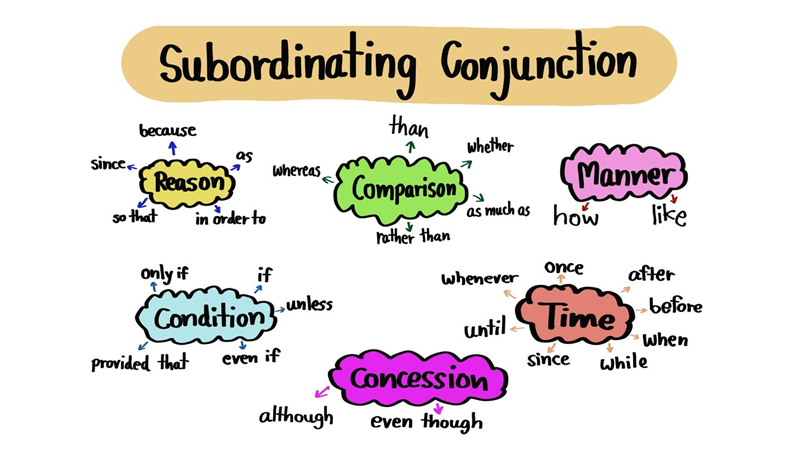
ประเภทของ subordinating conjunctions ในภาษาอังกฤษ
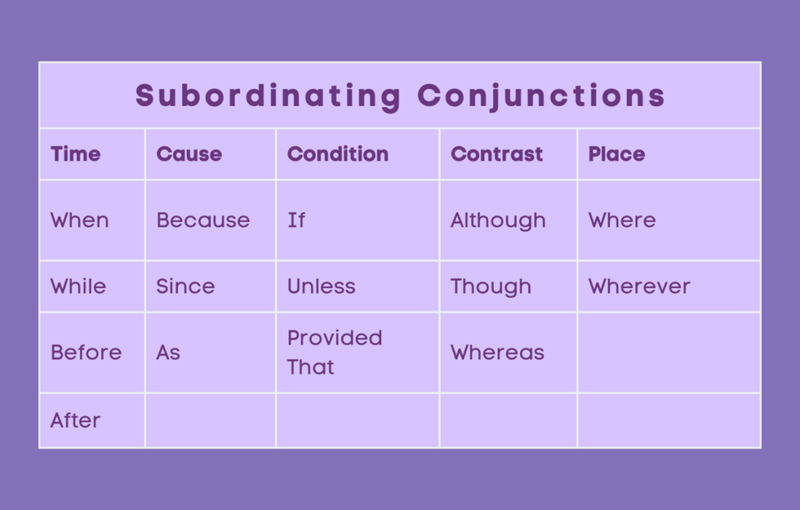
1. คำเชื่อมบอกเวลาและสถานที่ (Time and Place Conjunctions)
|
คำเชื่อม |
การใช้ |
ตัวอย่าง |
|
after / before |
แสดงเวลาที่บางสิ่งเกิดขึ้น |
Minnie went to bed after she did her homework. |
|
when |
หมายถึงเวลาที่เฉพาะเจาะจง |
Hoist your sail when the wind is fair. |
|
where |
หมายถึงสถานที่ |
The moon is not seen where the sun shines. |
|
wherever |
หมายถึงทุกสถานที่ |
I will follow you wherever you go. |
|
once / as soon as |
หมายถึงเวลาที่แน่นอน |
As soon as the teacher arrived, the students stood up. |
|
until |
ใช้กับเวลา มักใช้ในรูปปฏิเสธ |
We know not what is good until we lose it. |
2. คำเชื่อมแสดงสาเหตุ (Cause Conjunctions)
|
คำเชื่อม |
การใช้ |
ตัวอย่าง |
|
since / because |
แสดงเหตุผล |
Because he wanted to become a singer, he practiced all the time. |
|
now that / in that / seeing that |
เหตุผลที่อิงตามเวลาปัจจุบัน |
Now that we are in Europe, we should visit the Netherlands. |
|
because of / due to / on account of + noun/verb-ing |
เหตุผลที่ใช้คำนามหรือกริยาที่เติม -ing |
All flights were canceled because of fog. |
3. คำเชื่อมแสดงจุดประสงค์ (Purpose Conjunctions)
|
คำเชื่อม |
การใช้ |
ตัวอย่าง |
|
so that / in order that |
แสดงจุดประสงค์ |
I stepped aside so that she could enter. |
|
to / in order to / so as to + verb |
จุดประสงค์โดยใช้กริยา infinitive |
He leaned forward so as to hear more clearly. |
4. คำเชื่อมแสดงเงื่อนไข (Condition Conjunctions)
|
คำเชื่อม |
การใช้ |
ตัวอย่าง |
|
if |
แสดงเงื่อนไข |
If it rains, we will stay indoors. |
|
unless |
เงื่อนไขเชิงปฏิเสธ |
Do not call me unless it is an emergency. |
|
provided that / providing that |
เงื่อนไขที่มีข้อกำหนด |
I will go provided that I finish my work. |
|
as long as |
หมายถึง “ตราบเท่าที่” หรือ “เฉพาะเมื่อ” |
I will support you as long as you are honest. |
5. คำเชื่อมแสดงการเปรียบเทียบ (Comparison Conjunctions)
|
คำเชื่อม |
ตัวอย่าง |
|
as ... as |
Even Achilles was only as strong as his heel. |
|
than |
The heart sees further than the head. |
|
like |
There is no place like home. |
กฎการใช้เครื่องหมายวรรคตอนสำหรับ subordinating conjunctions
การใช้เครื่องหมายวรรคตอนอย่างถูกต้องช่วยให้ประโยคซับซ้อนอ่านเข้าใจง่ายขึ้น:
-
หากอนุประโยค (dependent clause) มาก่อนประโยคหลัก ให้ใส่เครื่องหมายจุลภาค (,) หลังอนุประโยค
-
ตัวอย่าง: If you cannot be good, be careful.
-
หากอนุประโยคมาหลังประโยคหลัก ไม่ต้องใส่เครื่องหมายจุลภาค
-
ตัวอย่าง: A dog will not howl if you beat him with a bone.
แบบฝึกหัด subordinating conjunctions พร้อมคำตอบ
Exercise 1: เติมคำในช่องว่างด้วย unless, because, if หรือ when
-
Linda often visits her mother ________ she comes back from Singapore.
-
Lona cannot hear me ________ I speak louder.
-
My cat ran away ________ the door was left open.
-
We will have a picnic ________ it does not rain tomorrow.
-
My boyfriend will buy a new car ________ he saves enough money.
Exercise 2: เขียนประโยคใหม่โดยใช้ subordinating conjunctions ที่กำหนดให้
-
Kovan wants to watch films. He finished his homework. (after)
-
Clara will come to her birthday party. She has time. (if)
-
My family cannot go camping. It is raining. (because)
-
Heidi is studying hard. She wants to pass the exam. (so that)
-
Kelvin went to bed. He was very exhausted. (because)
คำตอบ:
Exercise 1:
-
when
-
unless
-
because
-
if
-
if / when
Exercise 2:
-
Kovan wants to watch films after he finishes his homework.
-
Clara will come to her birthday party if she has time.
-
My family cannot go camping because it is raining.
-
Heidi is studying hard so that she can pass the exam.
-
Kelvin went to bed because he was very exhausted.
Monkey Junior - เส้นทางการเรียนรู้ภาษาอังกฤษที่ครอบคลุมสำหรับเด็ก
Monkey Junior เป็นแอปเรียนภาษาอังกฤษที่เข้าใจเด็กที่สุด เพราะทุกบทเรียนถูกสร้างขึ้นเพื่อให้เด็กได้เรียนจากการลงมือทำจริง เด็กจะได้ฟังเสียงเจ้าของภาษา ดูภาพเคลื่อนไหว และเล่นเกมที่เกี่ยวข้องกับคำศัพท์พื้นฐาน เนื้อหาครอบคลุมตั้งแต่ตัวอักษร คำศัพท์ ไปจนถึงประโยคง่าย ๆ
ทุกครั้งที่เด็กออกเสียง ระบบ AI จะช่วยตรวจสอบและให้คำแนะนำทันที เพื่อให้เด็กพูดได้อย่างถูกต้อง แอปยังมีระบบสะสมเหรียญและรางวัลเพื่อเพิ่มแรงจูงใจในการเรียนรู้ Monkey Junior คือจุดเริ่มต้นที่ทำให้ภาษาอังกฤษกลายเป็นเรื่องง่ายและสนุกสำหรับเด็กทุกคน
การเข้าใจการใช้ subordinating conjunctions อย่างถูกต้องจะช่วยให้คุณเขียนและสื่อสารภาษาอังกฤษได้อย่างเป็นธรรมชาติและมีตรรกะมากขึ้น ไม่ว่าจะเป็นการเขียนเรียงความ พูดในชีวิตประจำวัน หรือทำข้อสอบภาษาอังกฤษ การฝึกใช้ subordinating conjunctions บ่อย ๆ จะทำให้คุณสร้างประโยคซับซ้อนได้คล่องและสื่อความหมายได้ชัดเจนกว่าเดิม