.png)
The pronunciation of Y in English can be confusing because this letter works as both a consonant and a vowel. Understanding all Y sounds will help learners speak more naturally and pronounce words with confidence.
What Is the Pronunciation of Y in English?
Before learning specific rules, it is important to understand how flexible the pronunciation of Y is in English. Unlike many letters, Y can change its sound depending on its position in a word and the letters around it.
In general, Y can function as a consonant sound or represent several vowel sounds. Learning these patterns step by step helps learners avoid common pronunciation mistakes.
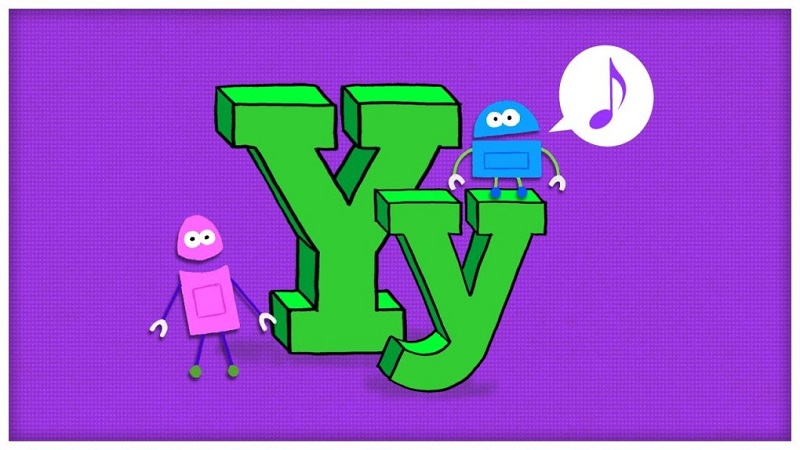
Pronunciation of Y as a Consonant /j/
The most common pronunciation of Y as a consonant is /j/, which sounds like the first sound in yes. This pronunciation usually appears at the beginning of words or syllables.
Examples:
-
yes
-
yellow
-
you
-
young
When pronouncing /j/, the tongue moves close to the roof of the mouth without blocking airflow. This sound is voiced and smooth.
Pronunciation of Y as a Long Vowel /aɪ/
In many words, the pronunciation of Y represents the long vowel sound /aɪ/, similar to the vowel sound in my or time.
Examples:
-
my
-
try
-
fly
-
cry
This sound often appears at the end of one-syllable words or stressed syllables.
Pronunciation of Y as a Long Vowel /iː/
Another important pronunciation of Y is /iː/, the long “ee” sound. This usually occurs at the end of words, especially in adjectives and nouns.
Examples:
-
happy
-
baby
-
city
-
party
In this case, Y sounds exactly like a long E, even though it is written differently.
Pronunciation of Y as a Short Vowel /ɪ/
In unstressed syllables, the pronunciation of Y can be the short vowel sound /ɪ/, similar to the vowel in sit.
Examples:
-
system
-
symbol
-
gym
-
mystery
This sound is short and relaxed, and it often appears in academic or technical words.
References: Little Learners
Pronunciation of Y as /ɪ/ or /i/ in Word Endings
In some words, especially plural forms or verb endings, the pronunciation of Y can vary slightly depending on stress and accent.
Examples:
-
families
-
studying
-
carrying
In these cases, Y changes to an “i” sound in spelling but still affects pronunciation rhythm.
Pronunciation of Y in Different Word Positions
Understanding word position makes the pronunciation of Y easier to predict.
|
Position |
Common Sound |
Examples |
|
Beginning |
/j/ |
yes, young |
|
Middle |
/ɪ/, /aɪ/ |
system, bicycle |
|
End |
/aɪ/, /iː/ |
my, happy |
This overview helps learners quickly identify the correct sound.
Common Mistakes with the Pronunciation of Y
Learners often struggle with the pronunciation of Y because it looks like a consonant but behaves like a vowel.
Common mistakes include:
-
Pronouncing Y as /j/ in all positions
-
Confusing /iː/ and /ɪ/ sounds
-
Mispronouncing Y at the end of words
-
Ignoring stress patterns
Recognizing these issues helps learners improve faster.
Exercises: Practice the Pronunciation of Y
Exercise 1: Identify the Sound of Y
Choose the correct sound: /j/, /aɪ/, /iː/, or /ɪ/.
-
yes
-
my
-
happy
-
gym
-
yellow
-
city
Exercise 2: Group the Words by Y Sound
Words: try, system, young, baby, cry, mystery
-
/j/:
-
/aɪ/:
-
/iː/:
-
/ɪ/:
Exercise 3: Choose the Correct Answer
-
Y in my sounds like ___
a) /iː/
b) /aɪ/ -
Y in happy sounds like ___
a) /iː/
b) /ɪ/ -
Y in yellow sounds like ___
a) /j/
b) /aɪ/
Exercise 4: Fill in the Blank
Choose the correct pronunciation of Y.
-
The ___ boy is very friendly. (young)
-
I want to ___ this problem. (try)
-
She feels ___ today. (happy)
-
He goes to the ___ every day. (gym)
Exercise 5: Read Aloud Practice
-
yes
-
my
-
happy
-
system
-
baby
-
yellow
-
mystery
-
cry
Focus on producing the correct Y sound in each word.
Answer Key
Exercise 1:
-
/j/
-
/aɪ/
-
/iː/
-
/ɪ/
-
/j/
-
/iː/
Exercise 3:
-
b
-
a
-
a
Improve the Pronunciation of Y with Monkey Junior and M-Speak
Mastering the pronunciation of Y becomes much easier with consistent practice and accurate feedback. Monkey Junior offers a clear learning path that introduces pronunciation rules gradually and reinforces them through listening and speaking activities.
With M-Speak pronunciation scoring technology, learners can practice words and sentences containing Y and receive instant feedback on sound accuracy, stress, and clarity. This helps learners quickly recognize whether they are using the correct Y sound.
Monkey Junior also combines native-speaker audio, interactive lessons, listening drills, and speaking exercises into one structured program. Multiple learning technologies support learners at every stage, ensuring steady progress and confident pronunciation.

Start learning with Monkey Junior today to master the pronunciation of Y clearly, naturally, and accurately.
Conclusion
The pronunciation of Y in English includes consonant and vowel sounds such as /j/, /aɪ/, /iː/, and /ɪ/. By understanding these patterns, practicing with targeted exercises, and using Monkey Junior with M-Speak pronunciation scoring, learners can pronounce Y correctly in all situations and speak English with greater confidence.