

.png)
A complex sentence is an essential grammatical structure in English that helps learners express detailed and nuanced ideas by connecting multiple clauses logically. Unlike simple sentences, a complex sentence contains one main clause and one or more dependent clauses that add extra information, such as reason, time, condition, or contrast.
Mastery of complex sentences enhances both writing and speaking fluency, making sentences more interesting, precise, and sophisticated. In this comprehensive guide, we will define what a complex sentence is, explore its structure, examine its main types, provide numerous examples, and offer practical tips for correct usage.
What is a complex sentence?
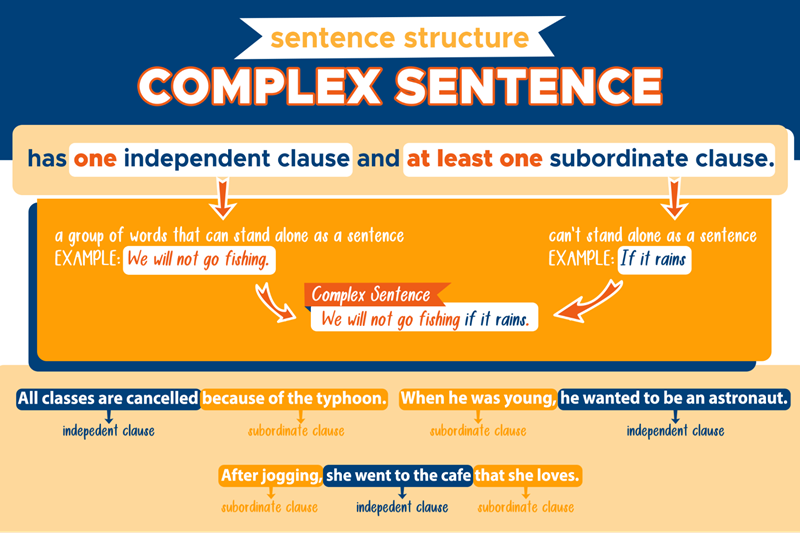
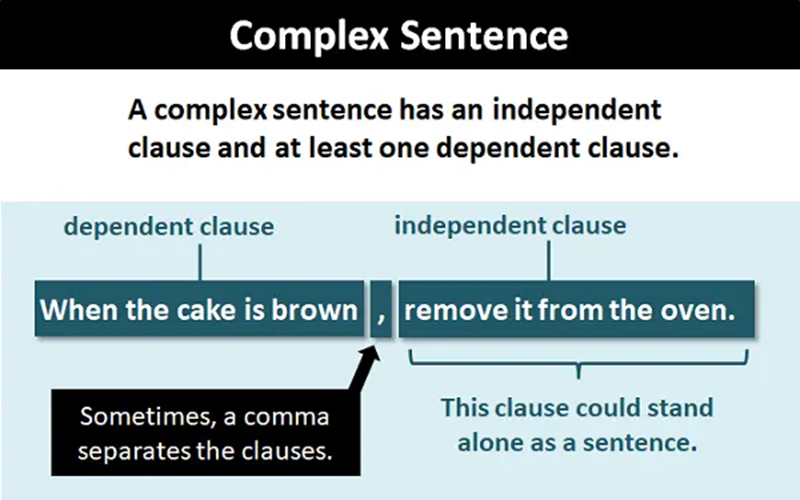
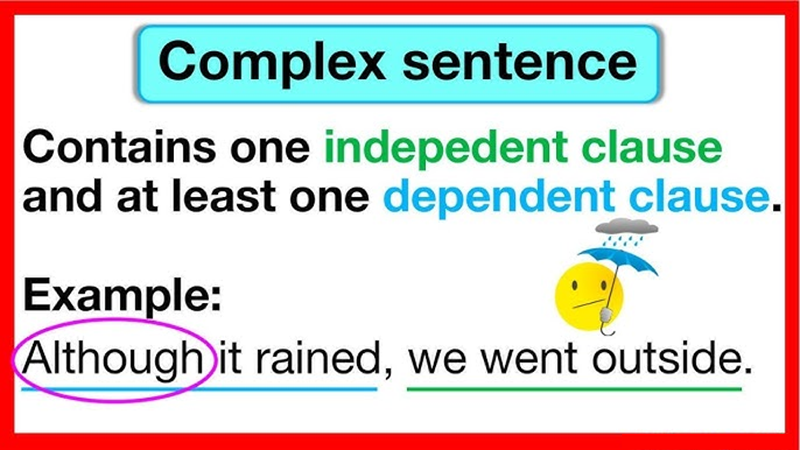
A complex sentence is a sentence that contains one independent clause and at least one dependent clause. The independent clause expresses a complete idea, while the dependent clause adds extra detail but cannot stand alone. Together, they create a structure that shows a clear relationship between ideas.
An independent clause has both a subject and a verb and forms a grammatically complete thought. In contrast, a dependent clause also has a subject and a verb but relies on the main clause for meaning. It becomes dependent because it begins with a subordinating conjunction or a relative pronoun.
Complex sentences differ from other sentence types in how they organize information. A simple sentence contains only one independent clause, while a compound sentence connects two independent clauses using conjunctions. A complex sentence stands between them by combining one complete idea with additional, supporting information that cannot function alone.
Examples:
-
Although she was tired, she continued working on her assignment.
-
When the sun rises, the birds start singing.
-
I won’t go out unless the rain stops soon.
-
He decided to take a break after he completed the project.
-
Because I had already eaten, I wasn’t hungry during the meeting.
Why use complex sentences?
Complex sentences play an essential role in making your writing clearer, richer, and more connected. Here are the key reasons why they matter:
-
Expressing relationships between ideas: They show how ideas connect through cause–effect, time, contrast, or condition. This helps readers understand not just what happened, but why and when it happened.
-
Making writing more sophisticated and natural: They allow you to present detailed information in a smooth, native-like way. This reduces choppy sentences and creates a more polished and professional tone.
-
Improving clarity and coherence in academic and formal writing: They help organize information by linking the main idea with supporting details. This leads to cleaner structure and stronger logical flow throughout the text.
|
Give your child a strong English foundation from the very beginning with Monkey Junior. Start learning through fun games, native audio, and smart AI tools–perfect for kids aged 0-11. Help them build real skills in listening, speaking, reading, and writing step by step. Download Monkey Junior today and watch your child grow in confidence and English ability.
|


Core components of a complex sentence
A complex sentence is built from several essential parts that work together to express a clear relationship between ideas. Understanding these components helps you form sentences that are both logical and meaningful.
-
Independent clause: This is the main clause that contains a subject and a verb and expresses a complete thought. It can stand alone as a full sentence, such as “She finished her work.”
-
Dependent clause: This clause also has a subject and a verb but does not express a complete idea. It relies on the independent clause for meaning, which is why it cannot stand alone-for example, “because she was tired.”
-
Subordinating conjunctions and relative pronouns: These connectors introduce dependent clauses and show the relationship between ideas. Common subordinating conjunctions include because, although, if, when, while relative pronouns include who, which, that. They link clauses smoothly and clarify how each idea fits within the sentence.
Example:
“I stayed home because I wasn’t feeling well.”
→ “I stayed home” = independent clause.
→ “because” = subordinating conjunction
→ “I wasn’t feeling well” = dependent clause.
Types of complex sentences
Complex sentences come in several forms depending on how the dependent clause functions within the sentence. Each type adds a different layer of meaning and helps express time, reason, description, or complete abstract ideas.
1. Adverbial complex sentences
Adverbial clauses modify the verb in the independent clause to show relationships such as time, reason, condition, or contrast. These clauses often begin with common subordinators like because, although, if, when, and while. They help clarify the circumstances under which the main action takes place.
Examples:
-
When the class ended, the students packed their bags., which shows a time relationship.
-
She stayed indoors because it was extremely cold., which expresses a cause–effect connection.
-
Although he was nervous, he delivered the presentation confidently., which introduces contrast.
2. Relative (adjectival) clauses
Relative clauses modify nouns by adding essential or additional information. They begin with relative pronouns such as who, which, that, depending on whether the noun being described is a person, thing, or general object. These clauses help specify or clarify the noun without starting a new sentence.
There are two main types: restrictive and non-restrictive clauses. Restrictive clauses provide essential information and do not use commas, while non-restrictive clauses add extra details and must be set off with commas. The choice affects both meaning and punctuation.
Examples:
-
The student who won the award is my classmate. (restrictive; essential detail)
-
My laptop, which I bought last year, still works perfectly. (non-restrictive; extra information)
-
This is the book that inspires me the most. (restrictive; identifies the exact book)
3. Nominal (noun) clauses
A nominal clause functions as a noun within the sentence and can act as a subject, object, or complement. These clauses often begin with words like that, whether, how, what, or why. They allow you to express complex ideas or abstract thoughts more naturally.
Nominal clauses can appear in different positions depending on their role. As a subject, they introduce the main idea of the sentence; as an object, they follow a verb and complete its meaning. As complements, they provide additional information about the subject.
Examples:
-
What you decided makes perfect sense. (subject)
-
She didn’t realize that the deadline was today. (object)
-
The truth is that he never received the message. (complement)
In conclusion, understanding and using complex sentences effectively is a vital skill for advancing your English proficiency. By mastering their structure, recognising the roles of dependent clauses, and applying correct punctuation, learners can convey ideas with greater precision and depth.