


.png)
The pronunciation of W in English plays an important role in clear speaking and listening. Although it looks simple, many learners confuse it with similar sounds or pronounce it incorrectly in different word positions.
What Is the Pronunciation of W in English?
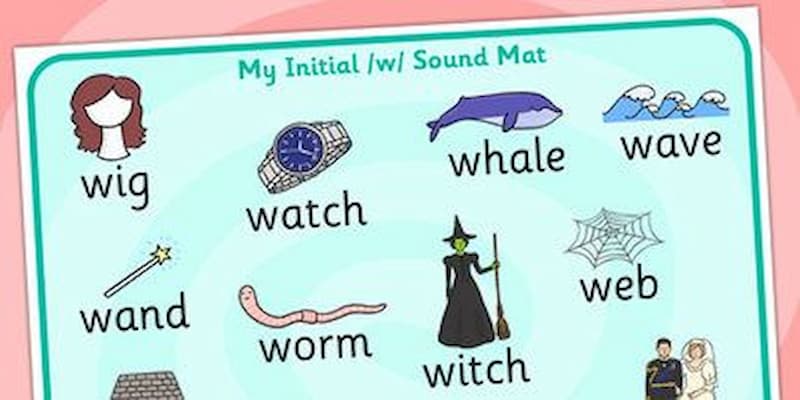
To understand the pronunciation of W, learners need to know that the letter W usually represents the sound /w/. This sound is voiced and is produced with rounded lips and a smooth glide into the following vowel.
The /w/ sound is common in English and appears frequently in everyday words. Learning it well helps improve both pronunciation accuracy and natural speech flow.
How to Produce the /w/ Sound Correctly
Correct mouth movement is the key to mastering the pronunciation of W. When producing /w/, the lips should be rounded as if preparing to say “oo,” then quickly move into the next vowel sound.
Important features of the /w/ sound:
-
Voiced consonant
-
Rounded lips
-
Smooth, quick transition into the vowel
Examples:
-
we
-
water
-
win
-
welcome
Practicing lip movement helps learners avoid stiff or unclear pronunciation.
Pronunciation of W at the Beginning of Words
When W appears at the beginning of words, the pronunciation of W is usually clear and easy to hear. This position is ideal for beginners to practice the sound.
Examples:
-
work
-
world
-
woman
-
wonder
Learners should focus on rounding the lips and voicing the sound clearly.
Pronunciation of W in the Middle of Words
In the middle of words, the pronunciation of W often blends smoothly with surrounding vowels. It may sound softer, but the lip rounding is still important.
Examples:
-
between
-
always
-
away
-
answer
This position helps learners practice smooth transitions between sounds.
Pronunciation of W at the End of Words
The letter W rarely appears at the end of modern English words, but when it does, the pronunciation of W is usually part of a vowel sound or diphthong.
Examples:
-
now
-
how
-
cow
-
slow
In these cases, W helps form a vowel sound rather than standing alone as a consonant.
Silent W in English Pronunciation
An important part of learning the pronunciation of W is recognizing when it is silent. In some words, W is written but not pronounced.
Common silent W words:
-
write
-
wrong
-
answer
-
two
Understanding silent W prevents confusion and improves reading accuracy.
Pronunciation of W vs V and U
Learners often confuse the pronunciation of W with /v/ or the vowel /u/. These sounds differ mainly in lip shape and airflow.
Comparison examples:
-
wet – vet
-
wine – vine
-
west – vest
The /w/ sound uses rounded lips and a glide, while /v/ uses teeth and lip contact.
References: Ellii (formerly ESL Library)
Common Mistakes with the Pronunciation of W
Many pronunciation problems come from similar habits across learners.
Common mistakes include:
-
Replacing /w/ with /v/
-
Weak lip rounding
-
Overpronouncing silent W
-
Pronouncing W as a vowel only
Recognizing these mistakes helps learners correct them faster.
Exercises: Practice the Pronunciation of W
Exercise 1: Identify the /w/ Sound
Decide whether the word contains a pronounced /w/.
-
water
-
wrong
-
window
-
write
-
always
-
cow
Exercise 2: Minimal Pair Practice
Read each pair aloud and focus on lip rounding.
-
wet – vet
-
wine – vine
-
west – vest
-
wall – fall
-
wish – fish
Exercise 3: Choose the Correct Word
-
She wants to ___ early. (win / vin)
-
The ___ is cold today. (weather / vether)
-
I like to ___ books. (write / right)
-
The ___ is open. (window / vindo)
Exercise 4: Read Aloud Word List
-
welcome
-
wonder
-
always
-
away
-
world
-
between
Exercise 5: Sentence Practice
-
We will walk to work together.
-
The weather was warm and windy.
-
She always wins the game.
-
He wrote a wonderful story.
-
They are waiting for the answer.
Answer Key
Exercise 1:
-
Yes
-
No
-
Yes
-
No
-
Yes
-
Yes
Exercise 3:
-
win
-
weather
-
write
-
window
Improve the Pronunciation of W with Monkey Junior and M-Speak
Mastering the pronunciation of W becomes easier with structured guidance and accurate feedback. Monkey Junior provides a clear learning path that helps learners understand lip movement, sound transitions, and common pronunciation rules.
With M-Speak pronunciation scoring technology, learners can practice speaking and receive instant feedback on accuracy, fluency, and sound clarity. This technology helps identify errors in real time and supports faster improvement.
Monkey Junior also combines native-speaker audio, listening practice, speaking exercises, and interactive lessons. Multiple supportive technologies work together to create a complete pronunciation learning experience with a clear and effective roadmap.

Start learning with Monkey Junior today and build confident pronunciation skills step by step.
Conclusion
The pronunciation of W in English focuses on one main sound, but it requires correct lip rounding, voicing, and awareness of silent forms. Through regular practice, clear rules, and support from Monkey Junior with M-Speak technology, learners can pronounce W accurately and speak English more naturally and confidently.