

.png)
Mastering voiceless sounds is a fundamental step toward achieving clear and natural English pronunciation. Many learners struggle with these sounds because they often confuse them with voiced sounds or pronounce them incorrectly due to influence from their native language. This comprehensive guide will help you understand what voiceless sounds are, how they work, and how to practice them effectively.
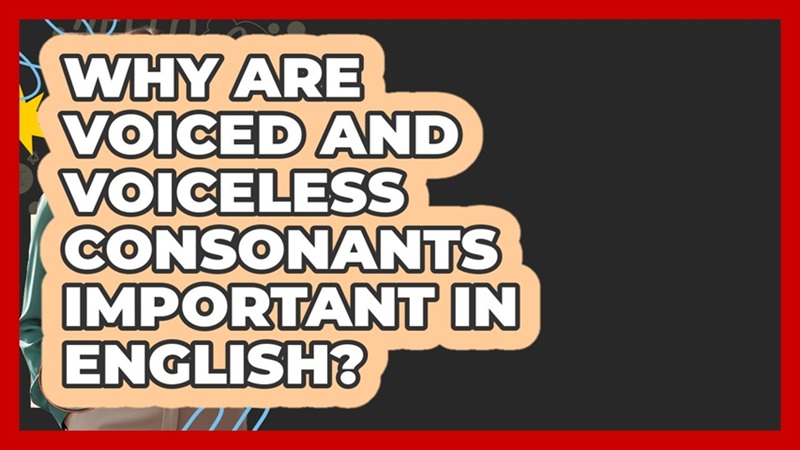
Why Voiceless Sounds Are Important in English
Before learning the technical details, it is essential to understand why voiceless sounds play such an important role in English pronunciation. These sounds are used in many common words and are critical for distinguishing meaning.
For example:
-
fan vs van
-
sip vs zip
-
thin vs then
If voiceless sounds are pronounced incorrectly, listeners may misunderstand your message. Mastering them will improve:
-
Pronunciation clarity
-
Listening accuracy
-
Speaking confidence
-
Overall fluency
What Are Voiceless Sounds?
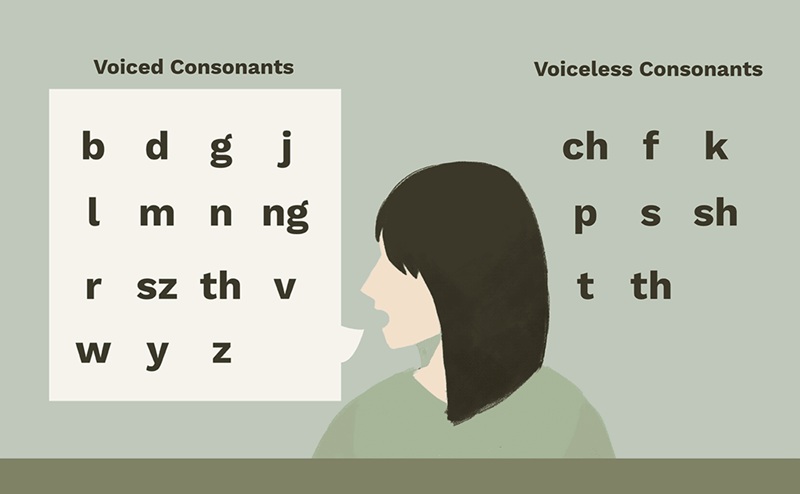
To fully understand the concept, let’s start with a clear definition. Voiceless sounds are speech sounds produced without vibration of the vocal cords.
How to Check Voiceless Sounds
You can easily identify voiceless sounds using a simple technique:
-
Place your fingers on your throat
-
Say a sound like /s/ or /f/
-
If you feel no vibration, it is a voiceless sound
In contrast, voiced sounds like /z/ or /v/ create vibration.
List of Voiceless Sounds in English
Now that you understand the definition, let’s look at the main voiceless sounds in English.
1. Voiceless Consonants
These are the most common voiceless sounds:
-
/p/ as in pen
-
/t/ as in top
-
/k/ as in cat
-
/f/ as in fish
-
/θ/ as in think
-
/s/ as in see
-
/ʃ/ as in she
-
/tʃ/ as in chair
-
/h/ as in hat
2. Detailed Examples and Comparison
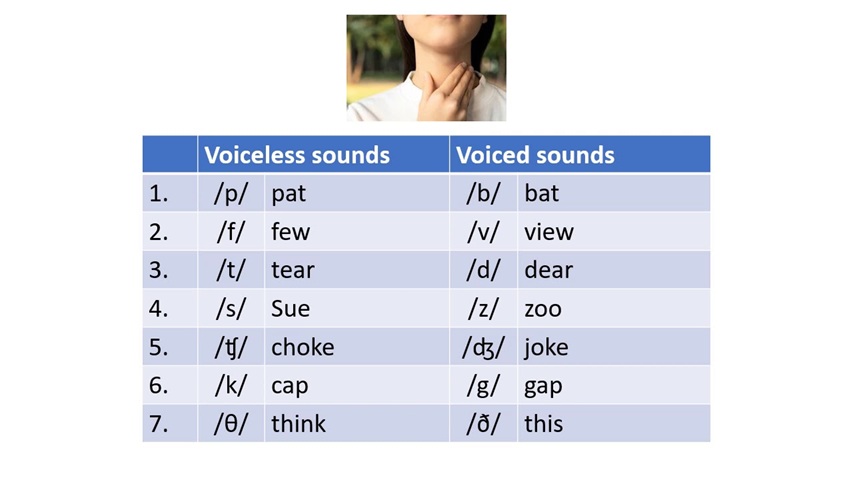
Understanding voiceless sounds becomes easier when you compare them with their voiced counterparts:
|
Voiceless |
Voiced |
Example Pair |
|
/p/ |
/b/ |
pat – bat |
|
/t/ |
/d/ |
ten – den |
|
/k/ |
/g/ |
coat – goat |
|
/f/ |
/v/ |
fan – van |
|
/θ/ |
/ð/ |
thin – then |
|
/s/ |
/z/ |
sip – zip |
|
/ʃ/ |
/ʒ/ |
pressure – measure |
|
/tʃ/ |
/dʒ/ |
cheap – jeep |
This comparison helps you hear and feel the difference clearly.
How Voiceless Sounds Affect Pronunciation
Beyond individual sounds, voiceless sounds influence pronunciation patterns in English, especially in endings and connected speech.
1. Voiceless Sounds and -ed Endings
As discussed in pronunciation rules, voiceless sounds affect how -ed is pronounced:
-
worked → /wɜːkt/
-
helped → /helpt/
-
laughed → /læft/
In these cases, -ed is pronounced as /t/ because it follows a voiceless sound.
2. Voiceless Sounds and Plural Endings
Voiceless sounds also affect plural pronunciation:
-
cats → /kæts/
-
books → /bʊks/
-
cups → /kʌps/
The plural ending is pronounced /s/ after voiceless sounds.
3. Voiceless Sounds in Connected Speech
In natural speech, voiceless sounds often become softer or linked with nearby sounds. For example:
-
stop please → /stɒp pliːz/
-
ask Tom → /ɑːsk tɒm/
Practicing connected speech helps you sound more natural.
Common Mistakes with Voiceless Sounds
Before practicing, it is important to identify common problems:
-
Confusing voiceless and voiced sounds
-
Adding extra vowel sounds after consonants
-
Mispronouncing /θ/ as /t/ or /s/
-
Ignoring final consonant sounds
These mistakes can significantly affect clarity.
Practical Exercises to Master Voiceless Sounds
After understanding what voiceless sounds are and how they differ from voiced sounds, the next step is to put this knowledge into practice. Many learners recognize the theory but still struggle in real communication because they do not train their ears and speech muscles consistently. To truly master voiceless sounds, you need a combination of listening, speaking, and self-correction exercises.
The following step-by-step exercises are designed to help you build awareness, improve accuracy, and develop natural pronunciation over time.
1. Start with Minimal Pair Training
Before producing voiceless sounds accurately, you must be able to hear the difference between voiceless and voiced sounds. Minimal pairs are the most effective way to train this skill.
Minimal pairs are words that differ by only one sound, often a voiceless vs voiced contrast.
Examples:
-
fan /fæn/ vs van /væn/
-
sip /sɪp/ vs zip /zɪp/
-
thin /θɪn/ vs then /ðen/
-
cap /kæp/ vs cab /kæb/
How to practice:
-
Listen to both words carefully
-
Repeat each word slowly
-
Place your fingers on your throat to feel vibration
-
Focus on keeping voiceless sounds completely vibration-free
This exercise builds the foundation for both listening and pronunciation accuracy.
2. Practice Airflow and Mouth Position
Once you can hear the difference, the next step is to control how you produce voiceless sounds. These sounds rely heavily on airflow rather than vocal cord vibration.
How to practice:
-
Place your hand in front of your mouth
-
Say sounds like /p/, /t/, /k/
-
Feel the burst of air released
Examples:
-
/p/ in pen
-
/t/ in top
-
/k/ in cat
You should notice a strong puff of air. If there is vibration instead, you may be producing a voiced sound by mistake.
Practicing in front of a mirror can also help you check your mouth and lip movements.
3. Isolate and Repeat Individual Sounds
Before moving to full words, it is important to isolate each voiceless sound and practice it repeatedly.
Example practice:
-
/s/ → ssssss
-
/f/ → ffffff
-
/ʃ/ → shhhhh
Focus on:
-
No vibration in the throat
-
Smooth and controlled airflow
-
Consistent sound quality
Repeat each sound 10–15 times until it feels natural. This helps train your speech muscles.
4. Move from Sounds to Words
After practicing individual sounds, begin using them in words. Start with simple words, then gradually increase difficulty.
Examples:
-
/p/: pen, paper, happy
-
/t/: time, better, water
-
/k/: cat, school, back
-
/s/: see, pass, science
Practice method:
-
Say the word slowly
-
Emphasize the voiceless sound
-
Repeat at natural speed
Pay special attention to final sounds, as learners often drop or weaken them.
5. Practice in Full Sentences
To make your pronunciation natural, you must practice voiceless sounds in connected speech. This step helps you apply what you have learned in real communication.
Examples:
-
“She picked a perfect place.”
-
“Tom took a cup of coffee.”
-
“I saw six small snakes.”
How to practice:
-
Read the sentence slowly
-
Focus on clear voiceless consonants
-
Gradually increase your speed
-
Maintain accuracy while speaking naturally
This improves both pronunciation and fluency.
6. Listening and Shadowing Practice
Listening is essential for mastering voiceless sounds because it trains your brain to recognize subtle differences.
Shadowing technique:
-
Listen to a native speaker
-
Repeat immediately after them
-
Copy their pronunciation, rhythm, and stress
Use resources such as:
-
Podcasts
-
YouTube pronunciation lessons
-
Audiobooks
Focus especially on how voiceless sounds are used in fast, natural speech.
7. Record Yourself and Analyze
Self-recording is one of the most powerful tools for improvement. It helps you identify mistakes that you may not notice while speaking.
How to practice:
-
Record yourself reading words or sentences
-
Compare with native pronunciation
-
Identify differences in sound clarity
Ask yourself:
-
Are voiceless sounds clear and sharp?
-
Is there any unwanted vibration?
-
Are final consonants fully pronounced?
Repeat the recording process until your pronunciation improves.
8. Combine with Real Communication Practice
Finally, to truly master voiceless sounds, you need to use them in real conversations. Practice speaking with:
-
Language partners
-
Teachers
-
Online speaking platforms
Try to consciously apply correct pronunciation during conversations. Over time, this will become automatic.
Conclusion
Mastering voiceless sounds is essential for clear and accurate English pronunciation. By understanding how these sounds work, practicing minimal pairs, and applying them in real speech, you can significantly improve your communication skills. With consistent effort, voiceless sounds will become natural, helping you speak English fluently and confidently.