

.png)
Learning how to pronounce s es correctly is an essential part of mastering English pronunciation. Many learners struggle with plural nouns and third-person singular verbs because the endings -s and -es are not always pronounced the same way. Understanding these pronunciation rules will help you speak more clearly, avoid common mistakes, and sound more natural in English.
Why Learning How to Pronounce S ES Is Important
Before exploring the rules, it is important to understand why learning how to pronounce s es matters. These endings appear in many common structures, including:
-
Plural nouns (cats, dogs, buses)
-
Third-person singular verbs (runs, eats, watches)
-
Possessive forms (John’s, teacher’s)
Incorrect pronunciation can lead to confusion or misunderstandings. For example:
-
rice vs rise
-
bus vs buzz
Mastering these endings improves:
-
Speaking clarity
-
Listening comprehension
-
Grammar accuracy in speech
-
Overall fluency
The Three Ways to Pronounce S ES in English
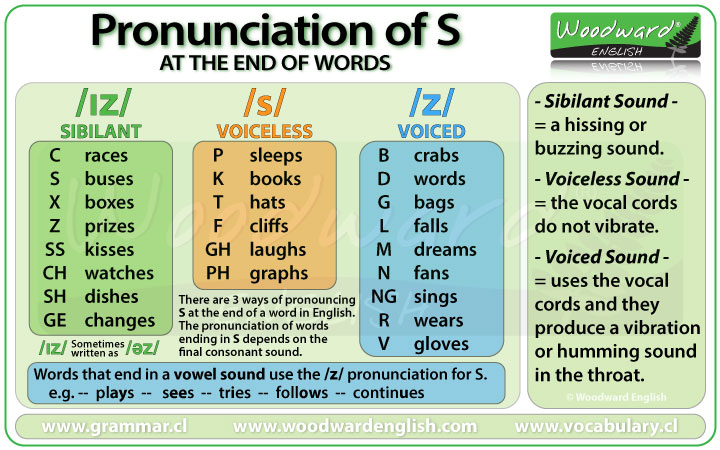
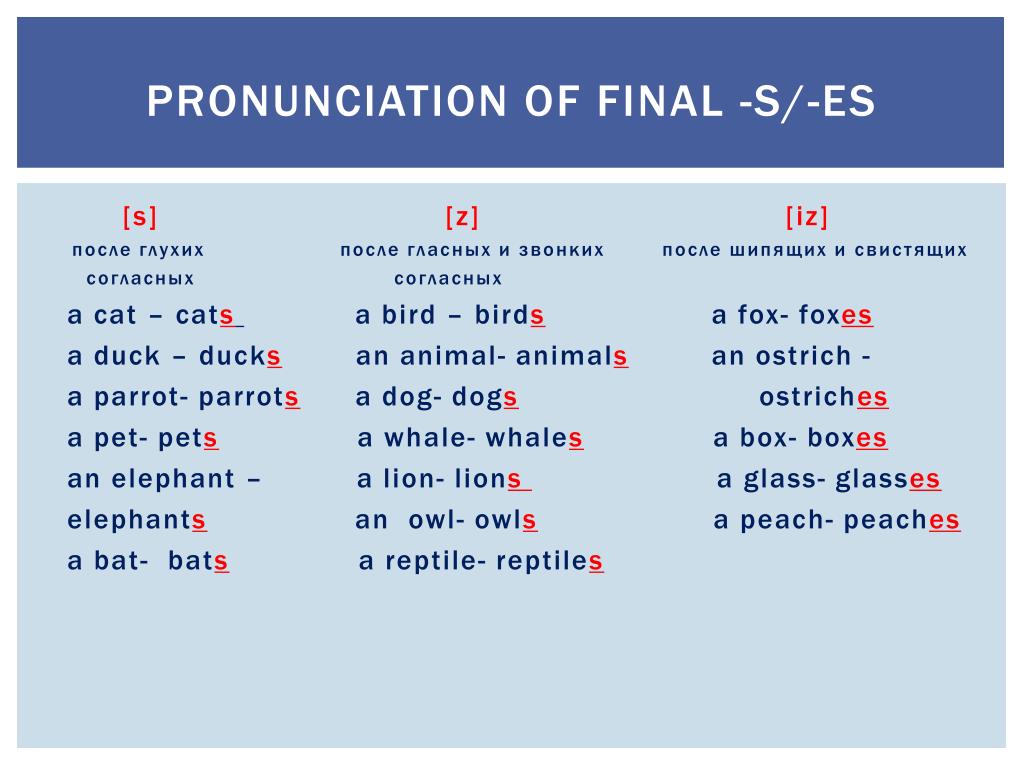
To understand how to pronounce s es, you need to focus on the final sound of the word, not the spelling. There are three main pronunciation patterns: /s/, /z/, and /ɪz/.
1. Pronounce /s/ After Voiceless Sounds
When a word ends with a voiceless sound, the -s or -es ending is pronounced as /s/.
Voiceless sounds include: /p/, /t/, /k/, /f/, /θ/
Examples:
|
Word |
Pronunciation |
|
cats |
/kæts/ |
|
books |
/bʊks/ |
|
cups |
/kʌps/ |
|
laughs |
/læfs/ |
|
months |
/mʌnθs/ |
Tip: The /s/ sound is soft and does not vibrate your vocal cords.
2. Pronounce /z/ After Voiced Sounds
When a word ends with a voiced sound, the ending is pronounced as /z/.
Voiced sounds include: vowels and consonants like /b/, /d/, /g/, /l/, /m/, /n/, /r/, /v/
Examples:
|
Word |
Pronunciation |
|
dogs |
/dɒgz/ |
|
pens |
/penz/ |
|
cars |
/kɑːrz/ |
|
lives |
/lɪvz/ |
|
plays |
/pleɪz/ |
Tip: Place your fingers on your throat; you should feel vibration when pronouncing /z/.
3. Pronounce /ɪz/ After Sibilant Sounds
When a word ends with a sibilant sound, you must add an extra syllable and pronounce the ending as /ɪz/.
Sibilant sounds include: /s/, /z/, /ʃ/, /ʒ/, /tʃ/, /dʒ/
Examples:
|
Word |
Pronunciation |
|
buses |
/ˈbʌsɪz/ |
|
boxes |
/ˈbɒksɪz/ |
|
watches |
/ˈwɒtʃɪz/ |
|
dishes |
/ˈdɪʃɪz/ |
|
garages |
/ˈɡærɑːʒɪz/ |
Tip: Make sure to clearly pronounce the extra syllable /ɪz/.
How to Identify the Correct Pronunciation
After learning the rules, the next step is knowing how to apply them quickly in real situations.
Step-by-step method:
-
Look at the final sound of the word (not the spelling)
-
Decide if it is voiced, voiceless, or sibilant
-
Apply the correct ending: /s/, /z/, or /ɪz/
Example:
-
book ends with /k/ (voiceless) → books /bʊks/
-
car ends with /r/ (voiced) → cars /kɑːrz/
-
bus ends with /s/ (sibilant) → buses /ˈbʌsɪz/
Common Mistakes When Learning How to Pronounce S ES
Many learners make similar mistakes:
-
Pronouncing all endings as /s/
-
Ignoring the extra syllable in /ɪz/
-
Confusing /s/ and /z/
-
Focusing on spelling instead of sound
These mistakes can affect clarity and make speech sound unnatural.
Practical Exercises to Master How to Pronounce S ES
After understanding the three pronunciation rules /s/, /z/, and /ɪz/, the next important step is to apply them in real practice. Many learners know the rules but still make mistakes when speaking because they do not train consistently or focus on real usage. To truly master how to pronounce s es, you need a combination of listening, speaking, and self-correction exercises.
The following structured exercises will help you build accuracy, improve your listening ability, and develop natural pronunciation over time.
1. Start with Sound Awareness Practice
Before producing the correct endings, you must be able to recognize the final sound of a word. This is the most important skill when learning how to pronounce -s and -es.
How to practice:
-
Take a list of base words (cat, dog, bus, book)
-
Say each word slowly
-
Focus on the final sound (not the spelling)
-
Decide if the sound is voiceless, voiced, or sibilant
Example:
-
cat ends with /t/ → voiceless → cats /kæts/
-
dog ends with /g/ → voiced → dogs /dɒgz/
-
bus ends with /s/ → sibilant → buses /ˈbʌsɪz/
This step builds the foundation for all other exercises.
2. Practice Minimal Pairs for /s/ and /z/
Many learners confuse /s/ and /z/, so training your ear is essential.
Examples:
-
rice /raɪs/ vs rise /raɪz/
-
face /feɪs/ vs phase /feɪz/
-
bus /bʌs/ vs buzz /bʌz/
How to practice:
-
Listen to both words
-
Repeat each one slowly
-
Place your fingers on your throat
-
Feel vibration for /z/, no vibration for /s/
Repeat each pair 5–10 times to build muscle memory.
3. Group Words by Pronunciation
Practicing words in groups helps you reinforce patterns and remember rules more easily.
Group 1: /s/ cats, books, cups, laughs, hats
Group 2: /z/ dogs, pens, cars, lives, plays
Group 3: /ɪz/ buses, boxes, watches, dishes, classes
Practice method:
-
Repeat each group aloud
-
Focus on consistent pronunciation
-
Practice slowly, then increase speed
Grouping helps your brain recognize patterns automatically.
4. Sentence-Level Practice
Once you are comfortable with individual words, move to sentences. This helps you use correct pronunciation in real communication.
Examples:
-
“She likes cats and books.”
-
“He plays games every day.”
-
“She watches movies on weekends.”
How to practice:
-
Read the sentence slowly
-
Emphasize the -s or -es endings
-
Gradually speak at natural speed
This step improves both pronunciation and fluency.
5. Listening and Shadowing Practice
Listening is essential for mastering natural pronunciation. Shadowing helps you imitate native speakers more effectively.
How to practice:
-
Choose audio (podcasts, videos, conversations)
-
Listen carefully to how -s and -es are pronounced
-
Repeat immediately after the speaker
-
Copy rhythm, stress, and ending sounds
Focus on how endings sound in fast, connected speech.
6. Record Yourself and Self-Correct
Self-recording is a powerful tool to identify mistakes and track improvement.
Steps:
-
Record yourself reading words or sentences
-
Compare with native pronunciation
-
Identify errors
Ask yourself:
-
Did I use /s/, /z/, or /ɪz/ correctly?
-
Did I add an extra syllable incorrectly?
-
Is the ending clear and natural?
Repeat until your pronunciation improves.
7. Practice in Real Communication
Finally, to truly master how to pronounce s es, you must use it in real conversations.
Practice ideas:
-
Speak with a partner or teacher
-
Use English in daily situations
-
Focus consciously on correct endings
Over time, correct pronunciation will become automatic.
8. Combine with Grammar Practice
Since -s and -es are linked to grammar, combine pronunciation with grammar exercises.
Examples:
-
Plurals: cats, dogs, buses
-
Third-person verbs: runs, plays, watches
Practice speaking full sentences:
-
“He works in an office.”
-
“She teaches English.”
This helps reinforce both grammar and pronunciation together.
Additional Tips for Better Pronunciation
-
Always focus on the final sound, not spelling
-
Practice daily with real examples
-
Learn pronunciation together with grammar
-
Use IPA to understand sounds clearly
-
Be patient and consistent
Conclusion
Mastering how to pronounce s es is a key step in improving your English pronunciation and fluency. By understanding the three main rules — /s/, /z/, and /ɪz/ — and practicing regularly with real examples, you can speak more clearly and naturally. Over time, these patterns will become automatic, helping you communicate confidently in English.