

.png)
Many learners confuse the present perfect continuous tense with the present perfect simple or the present continuous because they all relate to the present time. However, each tense focuses on a different aspect: completion, continuity, or current action. In this article, you will learn the definition, structure, and main uses of the present perfect continuous tense.
What is the present perfect continuous tense?
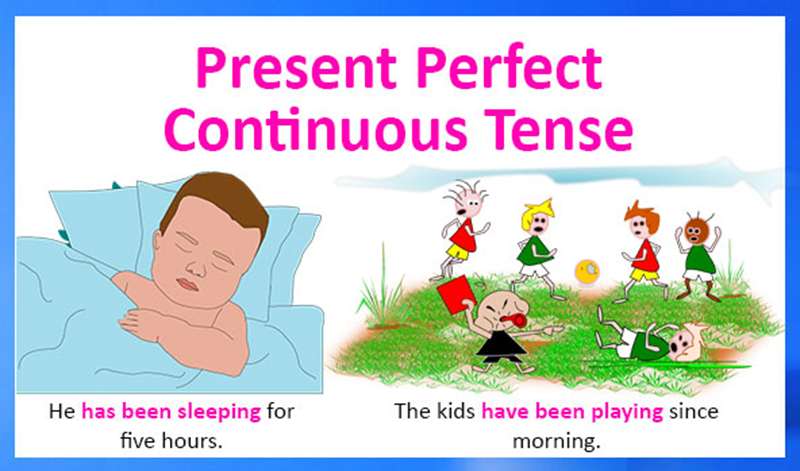
The present perfect continuous tense describes an action that started in the past and has continued up to the present moment. It focuses on the ongoing nature and duration of the action rather than its completion.
This tense is commonly used to show how long an activity has been happening or to explain a present result of a recent ongoing action. It combines two key ideas: duration and an action that connects the past with the present.
Examples:
-
She has been studying English for three years.
-
They have been working all day, so they look tired.
-
How long have you been waiting here?
-
It has been raining, and the streets are wet.
Structure of the present perfect continuous tense
1. Affirmative sentences
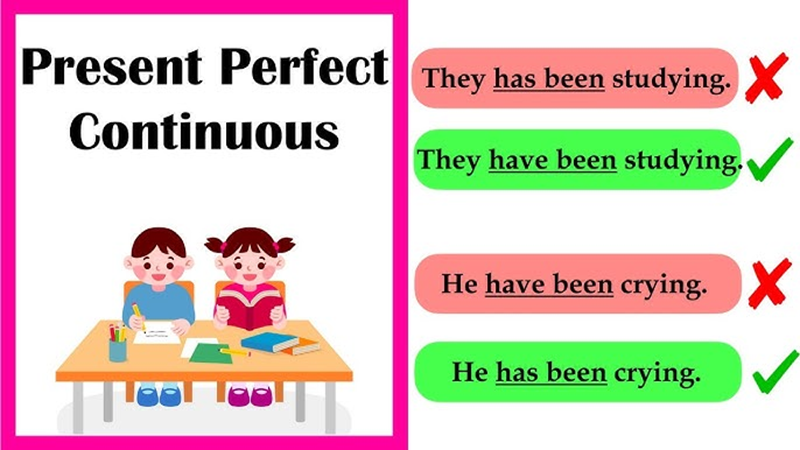
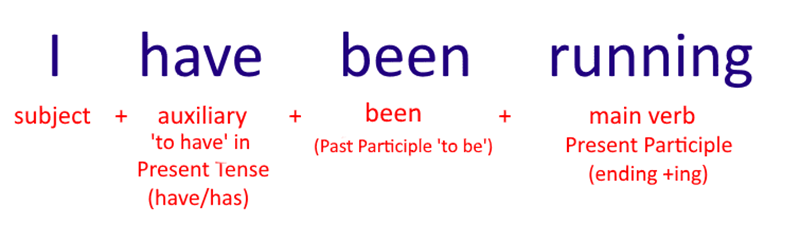
The affirmative form uses subject + have/has + been + verb-ing to show an ongoing action. It emphasizes the duration of the activity up to now.
Examples:
-
I have been learning English for two years.
-
She has been working from home lately.
2. Negative sentences
The negative form uses subject + have/has + not + been + verb-ing to show that an ongoing action has not been happening. It often highlights the absence of an expected activity.
Examples:
-
I have not been sleeping well recently.
-
They have not been paying attention in class.
3. Interrogative sentences (Questions)
Yes/no questions are formed with have/has + subject + been + verb-ing. Wh-questions add a question word at the beginning.
Examples:
-
Have you been waiting long?
-
Has she been studying for the exam?
-
How long have they been living here?
-
What have you been working on lately?
Uses of the present perfect continuous tense
1. Actions that started in the past and continue until now
This tense is used for actions that began in the past and are still happening at the present moment. The focus is on the ongoing nature of the action.
Examples:
-
She has been teaching at this school since 2018.
-
We have been waiting for the bus for twenty minutes.
2. Actions that recently stopped but have present results
It is also used for actions that stopped very recently and have visible or noticeable results now. The emphasis is on the effect the action has on the present.
Examples:
-
He is tired because he has been running.
-
The ground is wet because it has been raining.
3. Emphasizing duration of an action
The present perfect continuous highlights how long an action has been happening, often using for and since. For shows a period of time, while since shows the starting point.
Examples:
-
I have been working here for five years.
-
They have been studying online since March.
Present perfect continuous vs present perfect
The present perfect continuous focuses on the duration or ongoing nature of an action. The present perfect simple focuses on the result or completion of an action.
Comparison table:
|
Aspect |
Present Perfect Continuous |
Present Perfect |
|
Focus |
Duration and process |
Result or completion |
|
Form |
have/has + been + V-ing |
have/has + past participle |
|
Typical use |
Ongoing or recent actions |
Finished actions with present relevance |
Example sentences:
-
She has been reading for two hours. (focus on duration)
-
She has read the report. (focus on completion)
|
Give your child a strong English foundation from the very beginning with Monkey Junior. Start learning through fun games, native audio, and smart AI tools–perfect for kids aged 0-11. Help them build real skills in listening, speaking, reading, and writing step by step. Download Monkey Junior today and watch your child grow in confidence and English ability.
|


Present perfect continuous vs past continuous
The present perfect continuous connects past actions to the present moment. The past continuous refers to an action happening at a specific time in the past.
Examples:
-
I have been working all morning. (relevant now)
-
I was working at 9 a.m. yesterday. (specific past time)
Practice exercises
1. Fill in the blanks
Complete each sentence using the correct form of the present perfect continuous tense.
-
She __________ (study) for the final exam all week.
-
They __________ (work) on this project since Monday.
-
We __________ (wait) here for over an hour.
-
He __________ (practice) the piano all afternoon.
-
I __________ (try) to contact you all morning.
2. Sentence transformation
Rewrite each sentence using the present perfect continuous tense.
-
She started reading the book two hours ago and is still reading it.
-
He began learning Spanish last year and continues now.
-
They started living in this city in 2020 and still live here.
-
I started working on this report this morning and am still working on it.
-
We began training for the marathon three months ago and are still training.
3. Error correction
Each sentence contains one mistake. Find and correct it.
-
She has been know him for years.
-
They have been finish their homework all afternoon.
-
He has been work here since June.
-
We has been waiting for the bus for 30 minutes.
-
I have been understand the lesson very well.

Answers
Exercises 1:
-
She has been studying for the final exam all week.
-
They have been working on this project since Monday.
-
We have been waiting here for over an hour.
-
He has been practicing the piano all afternoon.
-
I have been trying to contact you all morning.
Exercises 2:
-
She has been reading the book for two hours.
-
He has been learning Spanish since last year.
-
They have been living in this city since 2020.
-
I have been working on this report since this morning.
-
We have been training for the marathon for three months.
Exercises 3:
-
She has known him for years.
-
They have been finishing their homework all afternoon.
-
He has been working here since June.
-
We have been waiting for the bus for 30 minutes.
-
I have been understanding the lesson very well.
By understanding the definition, structure, and common uses of the present perfect continuous tense, you can avoid confusion with similar tenses and communicate more naturally. Practice using it regularly in real-life contexts to build accuracy and confidence.