

.png)
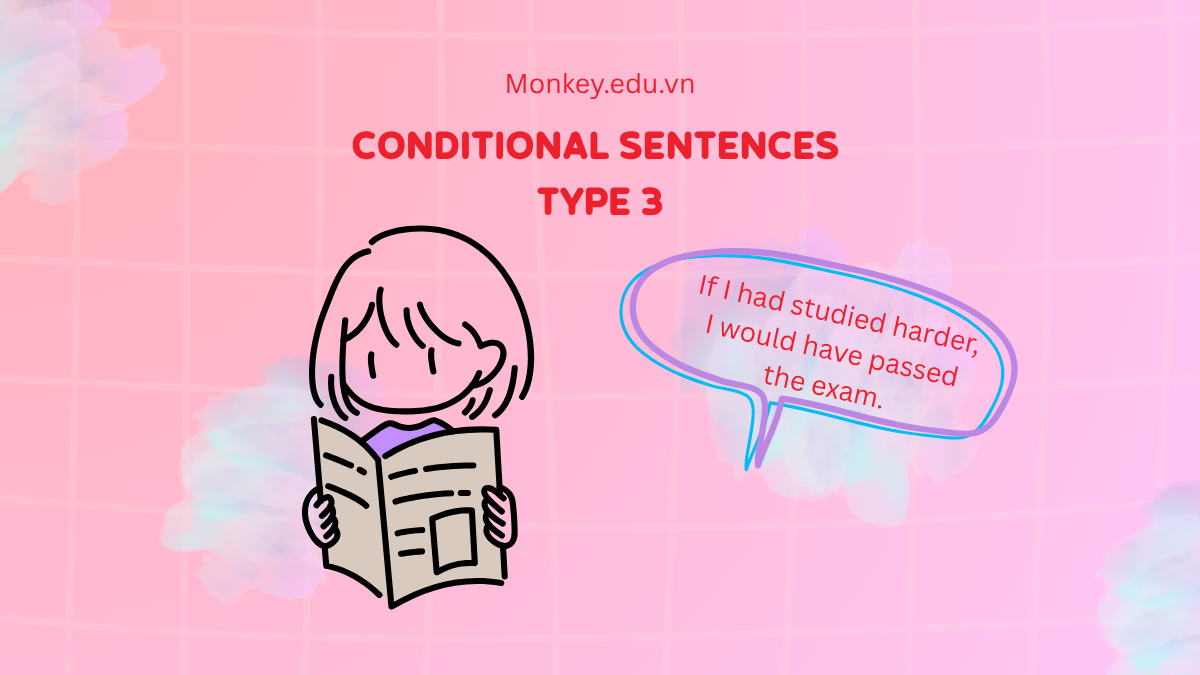
Conditional sentences type 3 is used to describe unreal situations in the past and imagine how events could have turned out differently. This structure allows speakers to express regret, missed opportunities, or alternative outcomes with clarity. Understanding how Type 3 conditionals work helps you communicate complex ideas more precisely, especially when reflecting on past decisions or analyzing hypothetical scenarios.
What are conditional sentences?
Conditional sentences describe a relationship between a condition and a possible result, allowing speakers to explain causes, effects, and imagined situations. They are formed with two parts: the if-clause, which presents the condition, and the main clause, which presents the outcome. This structure helps express facts, predictions, hypotheses, and unreal situations clearly and accurately.
The if-clause introduces the situation that must be true, expected, or imagined, while the main clause explains what happens or would happen because of it. Together, these two parts create a logical link that makes it easier to communicate both real possibilities and hypothetical ideas. Due to this flexibility, conditional sentences are common in everyday communication, storytelling, academic writing, and analytical reasoning.
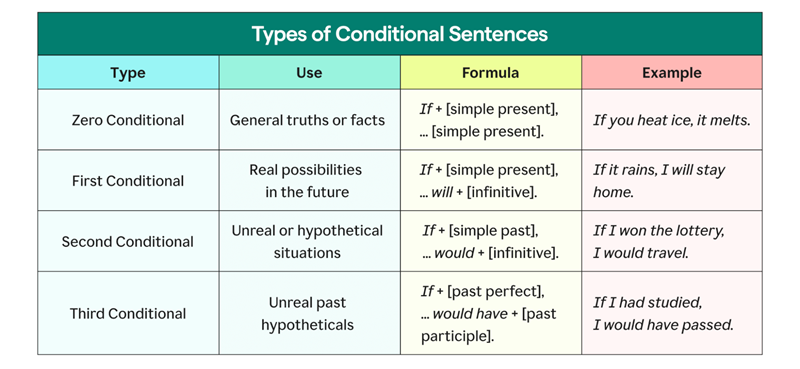
There are four basic types: Type 0 for general truths, Type 1 for real future possibilities, Type 2 for unreal present situations, and Type 3 for unreal past situations. Each type conveys a different level of reality by adjusting the verb tenses. In the next section, we focus specifically on conditional sentences type 3, which describe events that did not happen and their imagined results.
Examples:
-
If you heat water to 100°C, it boils. (Type 0)
-
If it rains tomorrow, we will stay home. (Type 1)
-
If I had more time, I would travel more. (Type 2)
-
If she had set an alarm, she would have woken up on time. (Type 3)
What is conditional sentence type 3?
Conditional Sentence Type 3 describes an unreal situation in the past and the imagined result that could have happened if the condition had been different. It deals with events that are already finished, so the outcome cannot be changed. This structure helps express reflection, evaluation, and hypothetical thinking about past actions.
Type 3 is often used to show regret or missed opportunities. It allows speakers to comment on what might have happened if someone had made a different choice. Because it focuses on unreal past scenarios, it often carries emotional meaning such as disappointment or hindsight.
This type differs from Types 1 and 2 in both time and reality. Type 1 talks about real future possibilities, and Type 2 describes unreal or imaginary situations in the present. Type 3 is the only type that focuses purely on the past and expresses outcomes that did not happen.
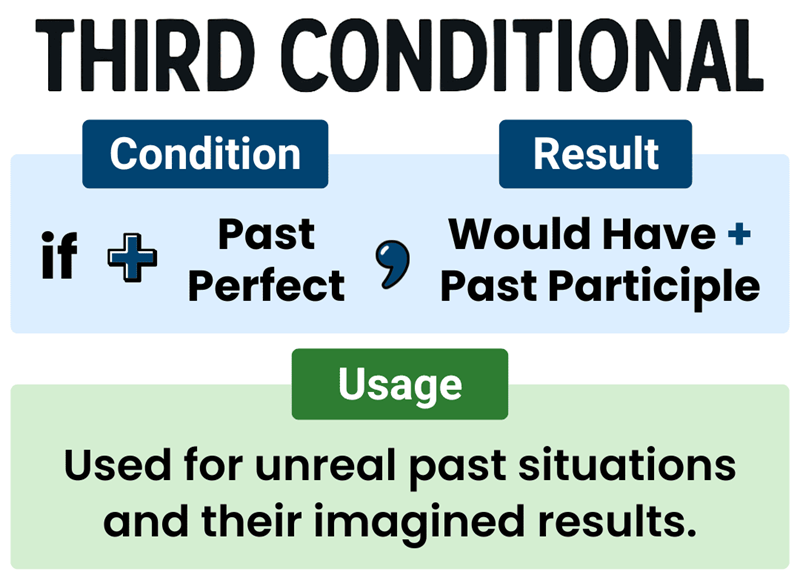
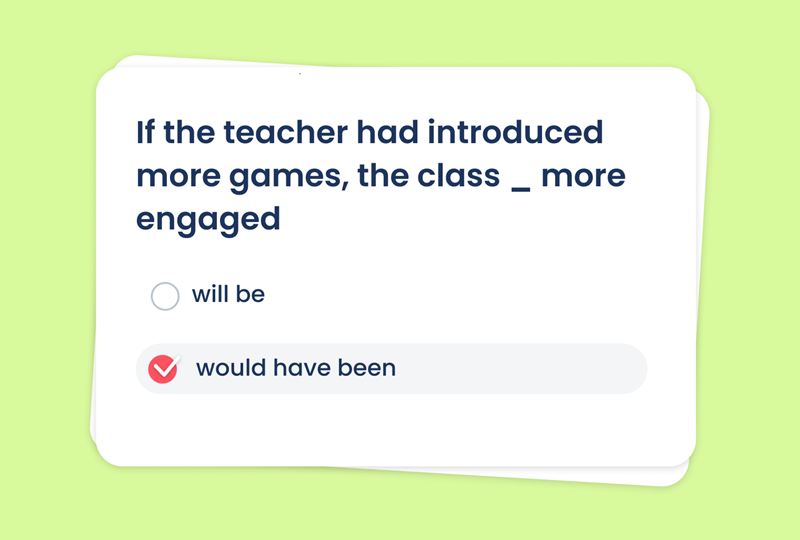
The standard form is: if + past perfect, followed by would have, could have, or might have plus a past participle. This pattern shows the imagined result of a condition that was not met. For example: If I had studied harder, I would have passed the exam. This means the speaker did not study enough and did not pass.
|
Give your child a strong English foundation from the very beginning with Monkey Junior. Start learning through fun games, native audio, and smart AI tools–perfect for kids aged 0-11. Help them build real skills in listening, speaking, reading, and writing step by step. Download Monkey Junior today and watch your child grow in confidence and English ability.
|


Structure and grammar rules
Understanding the structure of Type 3 conditionals is essential before looking at how and why they are used. The following tables and formats present the patterns clearly so you can recognize and apply them with accuracy. Explanations come after the structures to support deeper understanding.
Standard Structure
Structure:
If + past perfect (had + past participle), modal + have + past participle.
If-clause Main clause
Common modals:
-
would have
-
could have
-
might have
Example: If she had checked the map, she would have avoided the wrong turn.
The standard structure shows an unreal past condition in the if-clause and the imagined result in the main clause. The past perfect marks the event as already completed, while the modal perfect expresses an outcome that never happened. This form is essential when describing situations that can no longer be changed.
Inverted Form
Structure: Had + subject + past participle, main clause
Example: Had he left earlier, he would have caught the train.
The inverted form removes if and places had at the beginning of the clause to create a more formal tone. It keeps the same meaning as the standard structure but offers stylistic variety. Although less common in daily conversation, it appears frequently in writing.
Common mistakes to avoid
Common errors:
-
Using simple past instead of past perfect in the if-clause.
-
Leaving out after the modal verb.
-
Mixing verb forms between the two clauses.
These mistakes change the meaning or make the sentence ungrammatical. Keeping the past perfect in the condition and the modal perfect in the result ensures clarity. Mastering these forms helps you communicate hypothetical past situations accurately.
Mastering conditional sentences type 3 enables you to express hypothetical past events and their imagined results with accuracy. By learning its structure, usage, and common variations, you can describe regrets, alternative outcomes, and past possibilities more effectively. With steady practice, this grammar form becomes a powerful tool for clear and nuanced communication.