

.png)
The pronunciation of P in English seems simple, but many learners still pronounce it unclearly or confuse it with similar sounds. Learning how the /p/ sound works in different situations will help you speak more confidently and accurately.
What Is the Pronunciation of P in English?
To understand the pronunciation of P, learners should know that P represents the /p/ sound in English. This is a voiceless consonant, meaning the vocal cords do not vibrate when producing the sound.
The /p/ sound is made by closing the lips completely, stopping the airflow, and then releasing it suddenly.
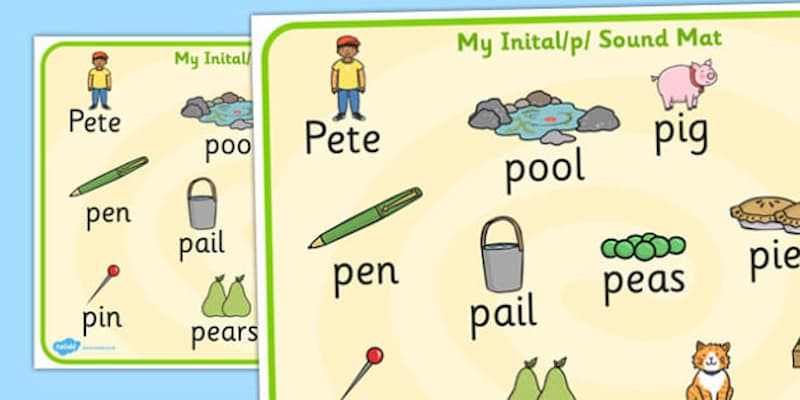
Examples:
-
pen
-
paper
-
People
How to Pronounce the /p/ Sound Correctly
Before practicing words, it is important to focus on mouth movement. In the pronunciation of P, both lips come together tightly, and air pressure builds up behind them.
When the lips open, the air is released quickly, creating a clear /p/ sound. You should feel a small burst of air in front of your mouth.
Examples:
-
pig
-
park
-
play
Aspirated and Unaspirated P Sounds
An important feature of the pronunciation of P is aspiration. When P appears at the beginning of stressed syllables, it is usually aspirated, meaning there is a strong burst of air.
Examples of aspirated /p/:
-
pen
-
pizza
-
police
When P comes after S, it is usually unaspirated, with little or no burst of air.
Examples of unaspirated /p/:
-
spin
-
sport
-
speak
Understanding this difference helps make your pronunciation sound more natural.
Pronunciation of P in Different Word Positions
The pronunciation of P stays consistent in sound, but aspiration may change depending on position.
At the beginning of words:
-
pen
-
price
In the middle of words:
-
happy
-
open
At the end of words:
-
cap
-
shop
In all positions, the lips must close firmly to keep the sound clear.
Silent P in English Words
Another important point in the pronunciation of P is that P can be silent in some words, especially before the letter N.
Examples:
-
psychology
-
pneumonia
-
pterodactyl
In these cases, learners should not pronounce the /p/ sound at all.
P Sound vs Similar Sounds (P and B)
A common problem in the pronunciation of P is confusing it with the /b/ sound. The main difference is voicing.
The /p/ sound is voiceless, while /b/ is voiced.
Examples:
-
pat vs bat
-
pear vs bear
-
cap vs cab
Practicing minimal pairs helps learners hear and produce the difference clearly.
References: Ellii (formerly ESL Library)
Common Mistakes with the Pronunciation of P
Even though the pronunciation of P is straightforward, learners still make common errors.
Typical mistakes include:
-
Not releasing enough air
-
Pronouncing /p/ as /b/
-
Forgetting that P can be silent
Careful listening and repetition are key to improvement.
Exercises: Practice the Pronunciation of P
Exercise 1: Identify the /p/ Sound
Decide whether the word contains a clear /p/ sound.
-
pen
-
bag
-
apple
-
spin
-
cup
-
map
Exercise 2: Aspirated or Unaspirated?
Decide whether the /p/ sound is aspirated or unaspirated.
-
park
-
speak
-
pencil
-
sport
-
paper
Exercise 3: Choose the Correct Word
Choose the word you hear or read with the /p/ sound.
-
pig / big
-
cap / cab
-
pear / bear
-
pin / bin
Exercise 4: Read the Sentences Aloud
Pay attention to the pronunciation of P in each sentence.
-
Please put the paper on the desk.
-
The puppy plays in the park.
-
She bought a pink pen.
-
We speak politely to people.
Answer Key
Exercise 1:
-
Yes
-
No
-
Yes
-
Yes
-
Yes
-
Yes
Exercise 2:
-
Aspirated
-
Unaspirated
-
Aspirated
-
Unaspirated
-
Aspirated
Exercise 3:
-
pig
-
cap
-
pear
-
pin
Learn the Pronunciation of P with Monkey Junior and M-Speak
Improving the pronunciation of P becomes much easier with structured practice and instant feedback. Monkey Junior offers a clear phonics-based learning roadmap that helps learners master consonant sounds step by step.
With M-Speak pronunciation scoring technology, learners receive real-time feedback on aspiration, sound clarity, and accuracy. This helps identify whether the /p/ sound is strong enough and correctly produced.
Monkey Junior also combines native-speaker audio, listening exercises, speaking practice, and multiple supporting technologies into one complete learning system. The clear learning path ensures steady progress and long-term pronunciation improvement.

Start learning with Monkey Junior today to build strong and confident English pronunciation using smart technology and guided practice.
Conclusion
The pronunciation of P in English focuses on producing a clear, voiceless /p/ sound with proper lip closure and airflow. By understanding aspiration rules, silent P cases, and practicing regularly with Monkey Junior and M-Speak technology, learners can speak English more clearly, naturally, and confidently.