

.png)
The pronunciation of X in English is more complex than many other letters because it can represent several different sounds. Understanding these patterns helps learners pronounce words clearly and confidently.
What Is the Pronunciation of X in English?
To fully understand the pronunciation of X, learners should know that the letter X does not have just one sound. Instead, its pronunciation changes depending on word position and spelling patterns.
In English, X commonly represents combinations of sounds rather than a single consonant. Learning these variations helps improve both speaking and listening accuracy.
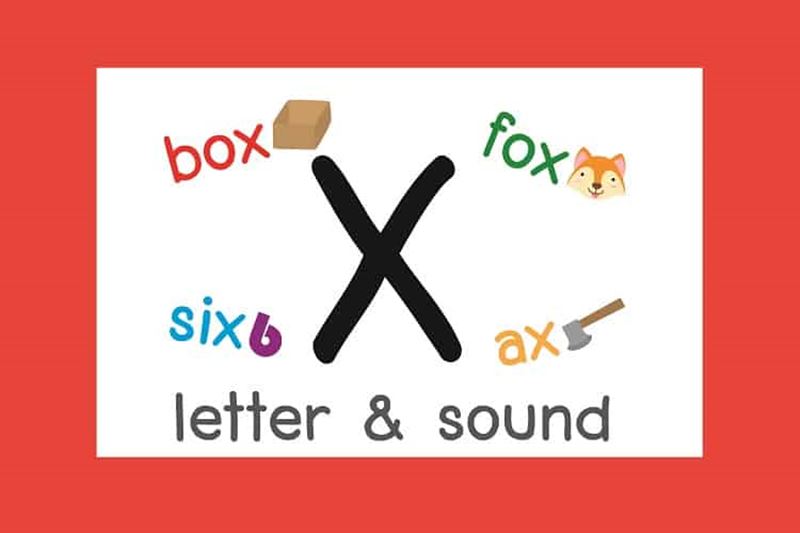
Pronunciation of X as /ks/
The most common pronunciation of X is /ks/. This sound appears frequently, especially in the middle or at the end of words.
Examples:
-
box
-
six
-
next
-
extra
In this case, X sounds like the combination of /k/ + /s/. Learners should pronounce both sounds clearly.
Pronunciation of X as /gz/
Another important pronunciation of X is /gz/. This usually happens when X appears between vowels or before a stressed syllable.
Examples:
-
exam
-
example
-
exact
-
exist
The /gz/ sound is voiced, so learners should feel vibration in their throat when pronouncing it.
Pronunciation of X as /z/
In some words, the pronunciation of X becomes a simple /z/ sound. This often occurs when X is at the beginning of words of Greek origin.
Examples:
-
xylophone
-
xenon
-
xenophobia
This pronunciation may surprise learners, so it is important to memorize common examples.
Pronunciation of X as /kʃ/
In certain words, especially those ending in “-xion,” the pronunciation of X changes to /kʃ/.
Examples:
-
connection
-
collection
-
production
-
fiction
Here, X combines with surrounding letters to create a completely different sound.
Silent X in English Pronunciation
In rare cases, the pronunciation of X may be silent, particularly in some proper names or borrowed words.
Examples:
-
Sioux
-
Bordeaux (borrowed spelling influence)
Although uncommon, learners should be aware that not every written X is fully pronounced.
References: Little Learners
Pronunciation of X at Different Word Positions
Understanding how position affects the pronunciation of X makes learning easier.
|
Position |
Common Sound |
Examples |
|
Beginning |
/z/ |
xylophone, xenon |
|
Middle |
/ks/, /gz/ |
extra, example |
|
End |
/ks/ |
box, six |
This pattern helps learners predict pronunciation more accurately.
Common Mistakes with the Pronunciation of X
Learners often struggle with the pronunciation of X due to its multiple sounds.
Common mistakes include:
-
Pronouncing all X sounds as /ks/
-
Forgetting voicing in /gz/
-
Mispronouncing Greek-origin words
-
Ignoring spelling patterns like “-xion”
Awareness of these errors helps learners self-correct more effectively.
Exercises: Practice the Pronunciation of X
Exercise 1: Identify the Sound of X
Choose the correct sound: /ks/, /gz/, /z/, or /kʃ/.
-
box
-
example
-
xylophone
-
connection
-
next
-
exist
Exercise 2: Group the Words by Sound
Words: exam, six, fiction, extra, xenon, exact
-
/ks/:
-
/gz/:
-
/z/:
-
/kʃ/:
Exercise 3: Choose the Correct Pronunciation
-
X in exam sounds like ___
a) /ks/
b) /gz/ -
X in box sounds like ___
a) /ks/
b) /z/ -
X in xylophone sounds like ___
a) /z/
b) /ks/
Exercise 4: Read Aloud
-
extra
-
exact
-
next
-
xylophone
-
fiction
-
example
Focus on correct sound and smooth transitions.
Exercise 5: Sentence Practice
-
She gave an excellent example.
-
The box is next to the desk.
-
He plays the xylophone very well.
-
This lesson explains the connection clearly.
-
They will examine the exact result.
Answer Key
Exercise 1:
-
/ks/
-
/gz/
-
/z/
-
/kʃ/
-
/ks/
-
/gz/
Exercise 3:
-
b
-
a
-
a
Improve the Pronunciation of X with Monkey Junior and M-Speak
Mastering the pronunciation of X is much easier with clear guidance and instant feedback. Monkey Junior provides a structured learning path that explains pronunciation rules step by step and reinforces them through practice.
With M-Speak pronunciation scoring technology, learners can practice speaking and receive immediate feedback on accuracy, sound choice, and clarity. This helps learners recognize which X sound they are producing and whether it matches native pronunciation.
Monkey Junior also integrates native-speaker audio, listening exercises, speaking drills, and interactive lessons. Multiple learning technologies work together to support pronunciation improvement with a clear and effective roadmap.

Start learning with Monkey Junior today to master the pronunciation of X confidently and accurately.
Conclusion
The pronunciation of X in English includes several different sounds, such as /ks/, /gz/, /z/, and /kʃ/. By understanding these patterns, practicing regularly, and using Monkey Junior with M-Speak pronunciation scoring, learners can pronounce X correctly in all contexts and communicate more clearly in English.