.png)
If you’ve ever wondered “what is a pronoun”, you’re not alone - pronouns are one of the building blocks of clear and natural English. They help replace nouns, reduce repetition, and make sentences smoother, so understanding how they work can instantly improve your writing and communication.
What is a pronoun?
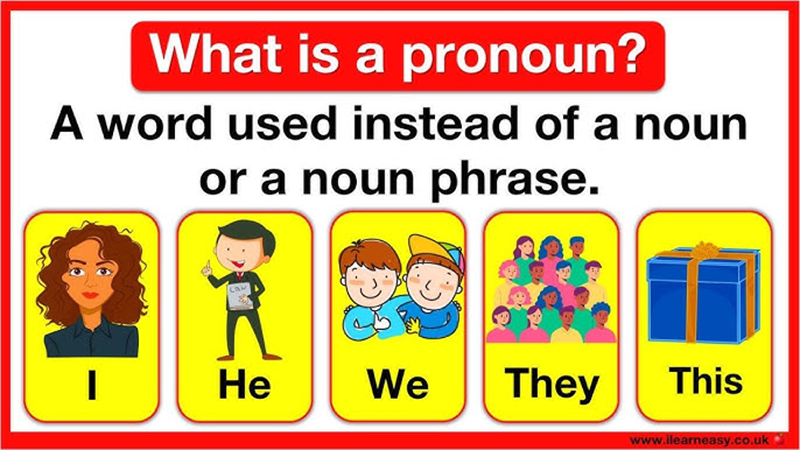
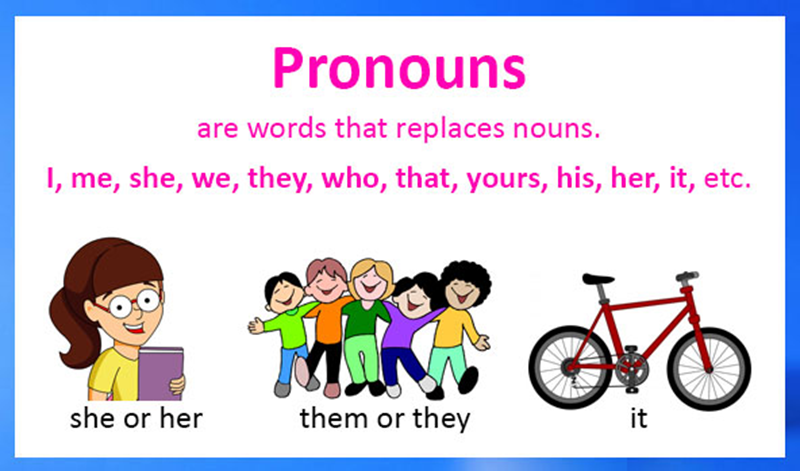
A pronoun is a word used to replace a noun or a noun phrase to avoid repetition and make sentences clearer. It stands in for people, objects, places, or ideas that have already been mentioned or are understood from context.
For example, instead of saying “Maria bought a book and Maria read the book,” you can say “Maria bought a book and she read it.” Here, she replaces Maria and it replaces the book, making the sentence more natural.
Every pronoun refers back to an earlier noun called its antecedent, which must be clear to the reader. If the antecedent is missing or ambiguous, the sentence can become confusing, so pronouns should always match their antecedents in meaning and number.
Why use pronouns?
Pronouns reduce unnecessary repetition by replacing nouns that appear multiple times, making sentences smoother and easier to read. This creates clearer structure and helps readers follow ideas without distraction.
They also support efficient communication by providing quick references to people or things already introduced. This gives sentences better flow and maintains context without overexplaining.
Main types of pronouns
1. Personal pronouns
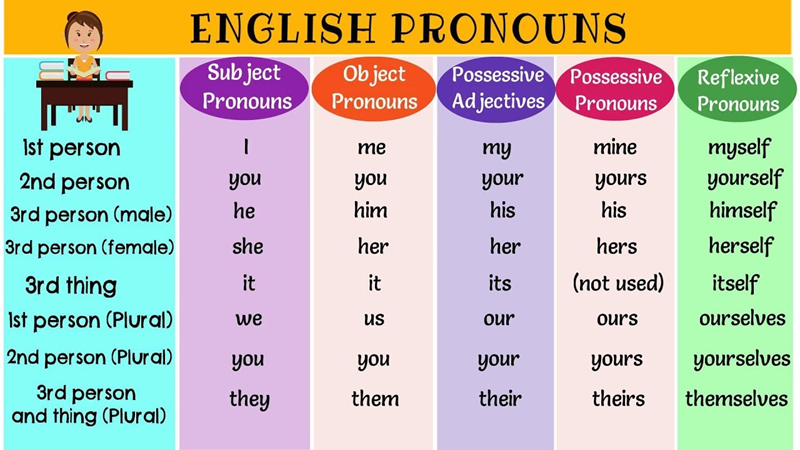
Personal pronouns replace specific people or things and shift form based on person, number, or case.
Example: “Sarah is kind, and she always helps others,” where she replaces Sarah.
2. Possessive pronouns
Possessive pronouns show ownership without repeating a noun.
Example: “This jacket is mine,” where mine stands in for the full noun phrase.
> They differ from possessive adjectives because they do not modify a noun directly, unlike “my jacket.”
3. Reflexive pronouns
Reflexive pronouns refer back to the subject of the sentence.
Example: “They prepared themselves for the exam,” where themselves reflects back to they.
> They are used when the subject and object are the same entity.
4. Demonstrative pronouns
Demonstrative pronouns point to specific items in a context.
Example: “This is delicious,” where this identifies a nearby object or situation.
5. Relative pronouns
Relative pronouns connect a clause to a noun and provide additional information.
Example: “The book that I borrowed was fascinating,” where that introduces the relative clause.
6. Interrogative pronouns
Interrogative pronouns are used to ask questions about people or things.
Example: “Who called you last night?” where who seeks the identity of a person.
7. Indefinite pronouns
Indefinite pronouns refer to non-specific people, things, or amounts.
Example: “Anyone can join the club,” where anyone refers to an unspecified group of people.
8. Reciprocal / Distributive pronouns
Reciprocal pronouns show mutual actions or relationships between two or more individuals.
Example: “The two friends supported each other,” where each other expresses a shared action.
|
Give your child a strong English foundation from the very beginning with Monkey Junior. Start learning through fun games, native audio, and smart AI tools–perfect for kids aged 0-11. Help them build real skills in listening, speaking, reading, and writing step by step. Download Monkey Junior today and watch your child grow in confidence and English ability.
|

Pronoun rules & agreement
Pronouns must clearly match their antecedents in number, person, and gender so the reader immediately knows what the pronoun refers to. A singular noun needs a singular pronoun, while a plural noun requires a plural pronoun to keep the meaning accurate.
A common mistake is using a pronoun with an unclear or missing antecedent, which makes the sentence confusing. Another frequent error is placing the antecedent too far from the pronoun, causing readers to misinterpret what the pronoun refers to.
Practice exercises
Questions
Exercise 1: Replace the underlined nouns with the correct pronouns.
-
Maria said that Maria would arrive late.
-
I saw the children at the park, and I waved to the children.
-
The laptop is new, but the laptop has a small scratch.
-
James and I finished James and I’s project early.
-
The cookies were delicious, so I saved the cookies for later.
Exercise 2: Choose the correct pronoun to complete each sentence.
-
This is the place ___ we met last year. (where / who / which)
-
Someone left ___ backpack on the bus. (their / his / her)
-
___ is calling at this hour? (Who / Which / Whom)
-
The team practiced by ___ before the match. (themselves / itself / himself)
-
I don’t know ___ of the options is better. (which / who / what)
Exercise 3: Identify whether the pronoun is correct. If incorrect, rewrite the sentence.
-
Each student must submit their assignment on time.
-
The cat chased the mouse, but it escaped.
-
When Anna met Laura, she hugged her tightly.
-
If anyone needs help, they can call me.
-
John told Mike that he needed a break.
Answers
Exercises 1:
-
Maria → she; Maria → she
-
the children → them
-
the laptop → it
-
James and I → we; James and I’s → our
-
the cookies → them
Exercises 2:
-
where
-
their
-
Who
-
themselves
-
which
Exercises 3:
(Answers may vary; correct versions shown below.)
-
Correct in modern usage (their is acceptable for singular).
-
Ambiguous — rewrite: The mouse escaped.
-
Ambiguous — rewrite: Anna hugged Laura tightly. (or specify who hugged whom)
-
Correct.
-
Ambiguous — rewrite: John told Mike that John needed a break.
FAQ section
1. How many types of pronouns are there?
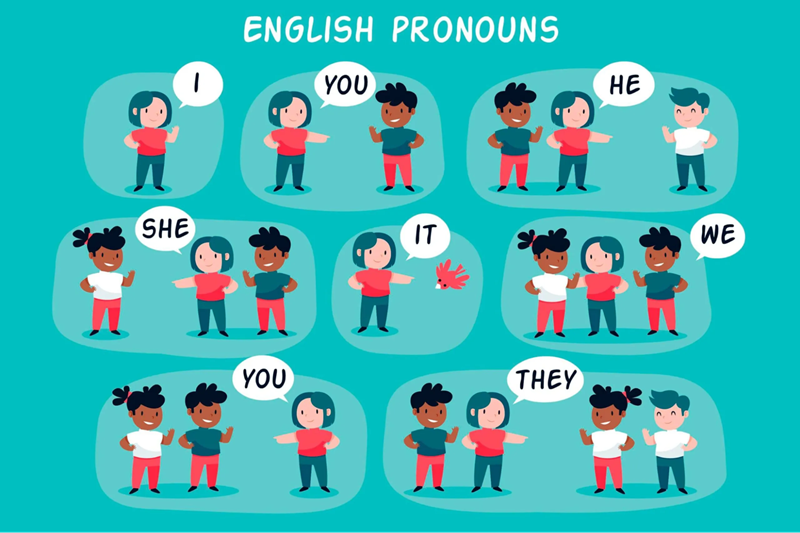
English pronouns are commonly grouped into major categories such as personal, possessive, reflexive, demonstrative, relative, interrogative, indefinite, and reciprocal. These groups help classify how each pronoun functions in a sentence.
2. When should I use reflexive pronouns?
Use reflexive pronouns when the subject and the object refer to the same person or thing. They also appear for emphasis, such as in “I’ll do it myself.”
3. Are pronouns always singular or plural?
Pronouns can be singular or plural depending on the noun they replace. Some pronouns, like “you” and “they,” can function as both, depending on context.
Now that you know “What is a pronoun?”, along with its key types and real examples, you can use them confidently to write clearer and more effective sentences. Keep practicing with different pronoun forms, and you’ll quickly build stronger grammar skills for both speaking and writing.