

.png)
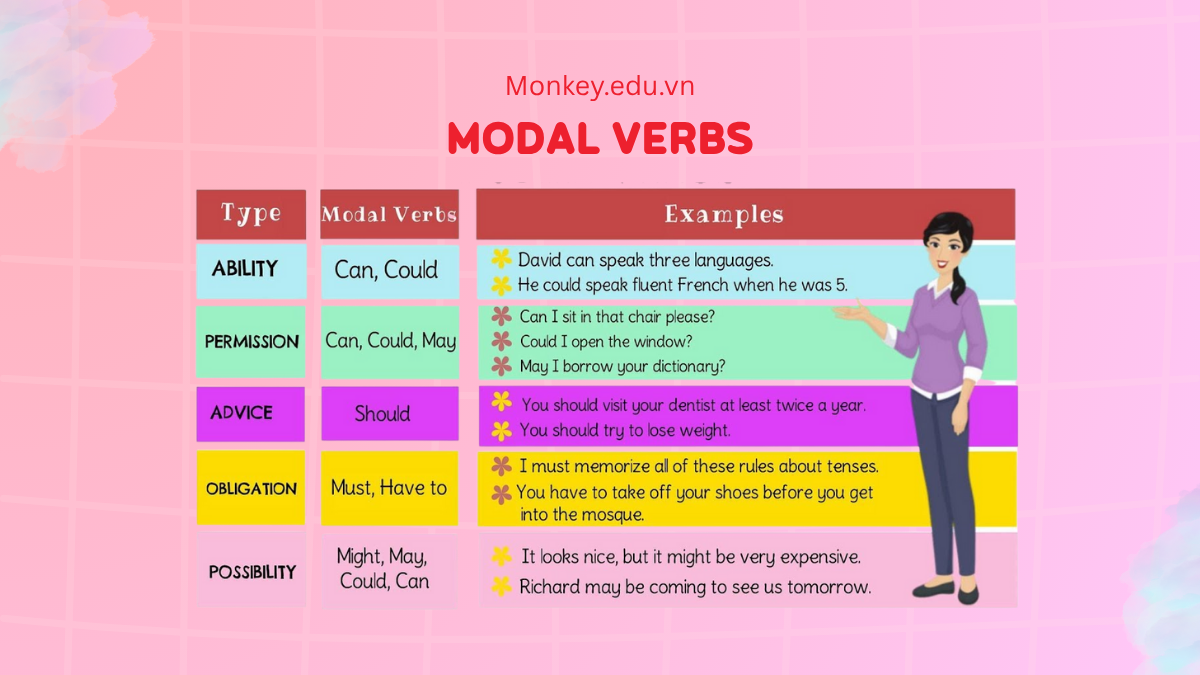
Modal verbs are essential auxiliary verbs that show a speaker’s attitude, such as possibility, ability, permission, necessity, obligation, and advice. Understanding how modal verbs work helps learners communicate more precisely and naturally in English.
What are modal verbs?
Modal verbs are auxiliary verbs that add meaning to a main verb by expressing ability, possibility, permission, obligation, or advice. They help indicate how certain, necessary, or likely an action is, rather than describing the action itself. Because of this, they function as powerful markers of intention and attitude in communication.
Unlike regular verbs, modal verbs do not change form based on the subject and are always followed by the base form of the main verb. They do not take “-s” in the third person, and they have no infinitive, participle, or continuous forms. These fixed patterns make modal verbs simpler in structure but richer in meaning.
Modal verbs matter because they allow speakers to express nuance and subtle shades of meaning that regular verbs cannot convey alone. They help learners sound more natural, polite, and precise in real-life communication. Mastering modal verbs also improves clarity when making requests, giving suggestions, or discussing possibilities.
Examples:
-
“You should rest more.”
-
“It might rain later.”
-
“Could you open the window?”
-
“I can drive.”
-
“She can’t swim.”
List of common modal verbs
Core modal verbs in English include the following, each expressing a specific type of meaning:
-
Can: Expresses ability or informal permission in everyday situations. Example: “She can swim very well.”
-
Could: Indicates past ability, polite requests, or a less certain possibility. Example: “Could you help me with this?”
-
May: Shows permission or a more formal degree of possibility. Example: “You may leave early today.”
-
Might: Suggests a weak or tentative possibility, often used when the outcome is uncertain. Example: “He might come later.”
-
Will: Expresses future intention, promises, or strong certainty. Example: “I will call you tomorrow.”
-
Shall: Used mainly in formal contexts to make offers, suggestions, or decisions. Example: “Shall we go now?”
-
Should: Gives advice, recommendations, or indicates expectation. Example: “You should drink more water.”
-
Must: Shows strong obligation, necessity, or a logical conclusion. Example: “You must wear a seatbelt.”
Semi-modals behave partly like modal verbs but follow more regular verb patterns:
-
Ought to: Expresses strong advice or a sense of moral responsibility. Example: “You ought to apologize.”
-
Need to: Shows necessity that depends on circumstances or external requirements. Example: “I need to finish this today.”
-
Used to: Describes past habits or states that no longer continue. Example: “I used to live in this city.”
Characteristics of modal verbs
Modal verbs follow several fixed grammatical rules that make them predictable in form but flexible in meaning:
-
Always followed by the base form of the main verb, which keeps the structure simple and prevents changes to the verb form. Example: “She can join us.”
-
Do not take the third-person “-s” and have no past participle or continuous forms. Example: “He will go,” not “He wills going.”
-
Carry multiple meanings depending on the context, allowing one modal verb to express ability, permission, possibility, or obligation. Example: “You must be tired” vs. “You must finish this.”
|
Give your child a strong English foundation from the very beginning with Monkey Junior. Start learning through fun games, native audio, and smart AI tools–perfect for kids aged 0-11. Help them build real skills in listening, speaking, reading, and writing step by step. Download Monkey Junior today and watch your child grow in confidence and English ability.
|


Functions & meanings of modal verbs
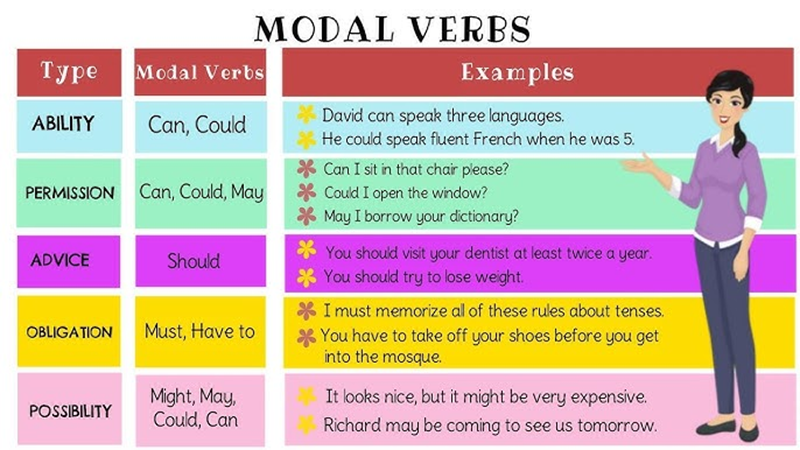
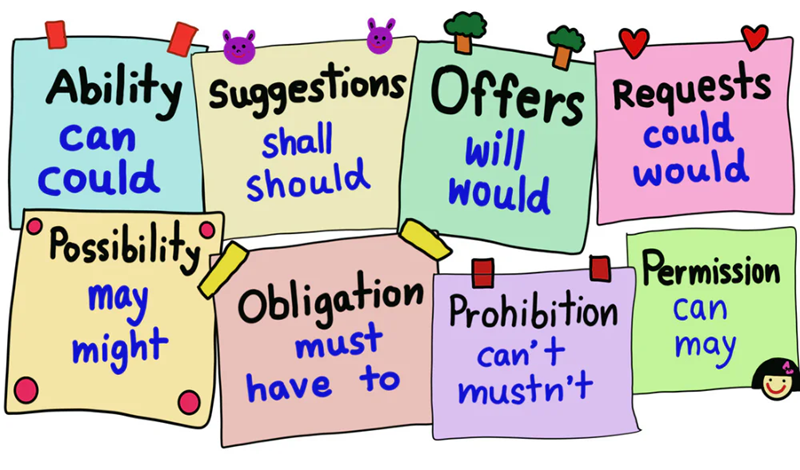
Modal verbs carry different communicative purposes that help speakers express certainty, politeness, obligation, or ability with precision. Each modal introduces a specific shade of meaning, allowing English sentences to sound more natural and context-appropriate.
1. Ability: Can, Could
These modals express someone’s capacity to perform an action, either now or in the past. Can is used for present ability, while could often shows past ability or a more tentative sense of capability.
Example: “She can speak French,” “He could run faster when he was younger.”
2. Possibility: May, Might
May and might show how likely something is to happen, with might typically suggesting a weaker or more uncertain possibility. They help speakers express doubt or openness without making firm predictions.
Example: “It may rain today,” “He might join us later.”
3. Permission: Can, May
These modals allow speakers to give or request permission, with may sounding more formal or politely structured. Can is widely used in everyday conversation, while may fits academic or professional contexts.
Example: “You can leave now,” “May I use your phone?”
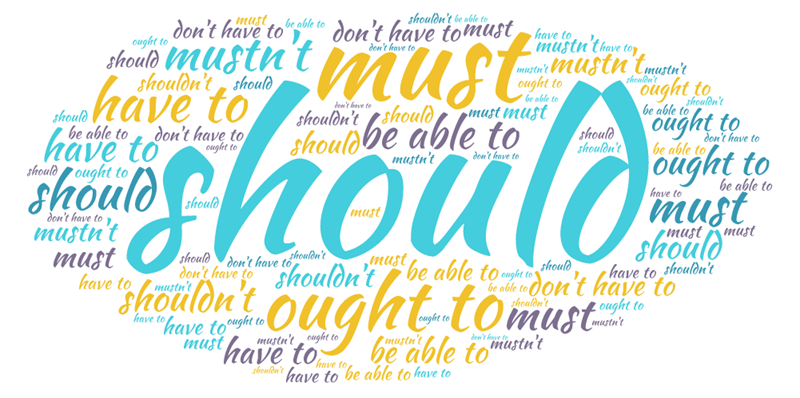
4. Obligation & Necessity: Must, Should, Ought to
Must expresses strong obligation or rules that leave little choice, while should and ought to soften the tone into advice or expectations. These modals help distinguish between strict requirements and recommended actions.
Example: “You must wear a helmet,” “You should rest,” “You ought to visit her.”
5. Request & Suggestion: Could, Would, Shall
These modals create polite, refined ways to ask for help or propose ideas. Could and would soften the request, while shall is often used to make suggestions or decisions in a formal or collaborative tone.
Example: “Could you help me?” “Would you like some tea?” “Shall we begin?”
Grammar rules & structures
Modal verbs follow simple, fixed grammar patterns that stay the same for all subjects, making them easier to use than many other verb forms. They always appear before the main verb and do not change according to tense or person.
-
Positive Forms: A positive sentence places the modal verb before the base verb to express ability, possibility, permission, or intention. Example: “She may leave early,” “They will join us.”
-
Negative Forms: Negative forms add not directly after the modal verb, with optional contractions to sound more natural. Example: “He cannot swim,” “You shouldn’t worry.”
-
Question Forms: Questions with modals simply invert the modal and the subject, creating a clear and direct structure. Example: “Can you help me?” “Will they come?”
-
Position in the Sentence: Modal verbs always come before the main verb and cannot appear after another auxiliary verb. This fixed position ensures that the meaning of the modal remains clear. Example: “She might call later,” not “She calls might later.”
Modal verbs are small but powerful tools in English grammar. Mastering their meanings and uses will improve writing, speaking, and understanding of nuanced English expression. Practicing them in real contexts helps learners build confidence and fluency.