
.png)
The pronunciation of G in English can be confusing because this letter has more than one sound. Understanding when G sounds hard or soft will help you speak more clearly and confidently.
What Is the Pronunciation of G in English?
To begin learning, it is important to know that the pronunciation of G in English has two main sounds: the hard G sound /g/ and the soft G sound /dʒ/.
The hard G sound is a voiced consonant made by stopping air at the back of the throat and releasing it. The soft G sound is similar to the sound of J and is produced by pushing air through the mouth with the tongue near the roof.
Examples:
-
Hard G: go, game, girl
-
Soft G: giant, giraffe, age
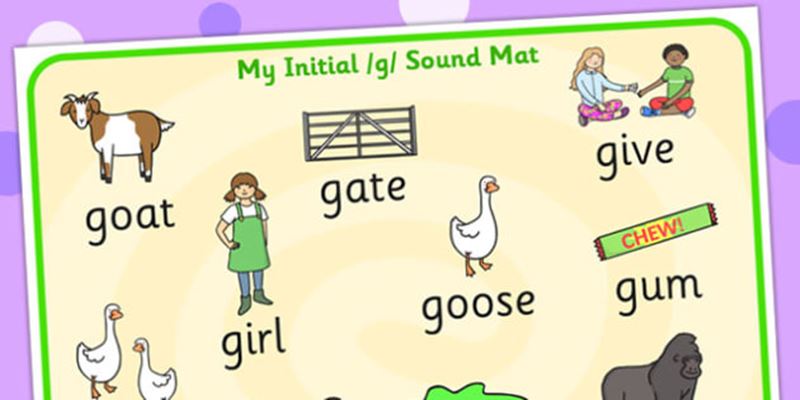
How to Pronounce the Hard G Sound /g/
Before practicing words, learners should focus on how the hard G sound is formed. In the pronunciation of G, the hard sound /g/ is produced by raising the back of the tongue to touch the soft part of the mouth and then releasing air.
This sound appears most often when G comes before the letters A, O, or U.
Examples:
-
gate
-
gold
-
gum
Make sure your voice is on when pronouncing /g/, as it is a voiced sound.
How to Pronounce the Soft G Sound /dʒ/
Another important part of the pronunciation of G is the soft G sound. This sound is similar to the J sound and is common when G appears before E, I, or Y.
To pronounce /dʒ/, start with the tongue touching the roof of the mouth, then release air with voice.
Examples:
-
gentle
-
giant
-
gym
Learning this rule helps learners predict the correct sound in many English words.
Pronunciation of G in Different Word Positions
Understanding how G sounds in different positions makes pronunciation more natural. The pronunciation of G can appear at the beginning, middle, or end of words.
Examples at the beginning:
-
green
-
gift
Examples in the middle:
-
bigger
-
magic
Examples at the end:
-
dog
-
big
At the end of words, the hard G sound /g/ is more common than the soft sound.
Common Mistakes with the Pronunciation of G
Many learners struggle with the pronunciation of G because they apply one rule to all words. A common mistake is pronouncing a soft G as a hard G, or the opposite.
Typical errors include:
-
Pronouncing giant with a hard /g/
-
Confusing age and egg
-
Forgetting to voice the /g/ sound
Listening carefully and practicing with feedback helps correct these mistakes.
References: Bounce Patrol - Kids Songs
Exercises: Practice the Pronunciation of G
Exercise 1: Identify Hard G or Soft G
Decide whether the G sound is hard (/g/) or soft (/dʒ/).
-
game
-
giant
-
gum
-
giraffe
-
gold
Exercise 2: Choose the Correct Word
Choose the word that matches the sound you hear or practice saying both.
-
gate / gentle
-
go / gym
-
bag / badge
-
girl / giraffe
Exercise 3: Read the Sentences Aloud
Pay attention to the pronunciation of G in each sentence.
-
The girl gave a gift to her friend.
-
The giant green dragon is friendly.
-
We go to the gym together.
Answer Key
Exercise 1:
-
Hard
-
Soft
-
Hard
-
Soft
-
Hard
Exercise 2:
-
gate
-
go
-
bag
-
girl
Learn the Pronunciation of G with Monkey Junior and M-Speak
Mastering the pronunciation of G is much easier with guided practice and accurate feedback. Monkey Junior provides a structured learning path that teaches both hard and soft G sounds through phonics, vocabulary, and full sentences.
With M-Speak technology, learners receive instant pronunciation scores and detailed feedback on sound accuracy, mouth movement, and voicing. This helps learners quickly identify mistakes and improve their pronunciation.
Monkey Junior also combines native-speaker audio, interactive speaking exercises, and a clear learning roadmap that moves from sounds to words and real communication.
Start practicing today with Monkey Junior to build strong pronunciation skills and speak English with confidence.

Conclusion
The pronunciation of G in English includes both hard and soft sounds, and learning the rules behind them is essential for clear speech. With regular practice and support from Monkey Junior and M-Speak technology, learners can improve accuracy, confidence, and fluency in English pronunciation.