

.png)
The pronunciation of J in English is consistent but still challenging for many learners. Learning how to produce the /dʒ/ sound correctly will help you speak more clearly and confidently.
|
LISTEN TO A QUICK AUDIO SUMMARY OF THE ARTICLE |
What Is the Pronunciation of J in English?
To begin, learners should understand that the pronunciation of J in English is almost always the /dʒ/ sound. This is a voiced consonant sound made by stopping the air and then releasing it with friction.
The sound combines a quick stop /d/ with a soft friction sound /ʒ/, which is why it feels slightly stronger than similar sounds.
Examples:
-
job
-
jump
-
Jacket
How to Pronounce the /dʒ/ Sound Correctly
Before practicing words, it is important to understand how the sound is formed. In the pronunciation of J, the tongue touches the roof of the mouth just behind the teeth, then releases air with voice.
Your vocal cords should vibrate, and your lips are slightly rounded. Practicing slowly helps build accuracy.
Examples:
-
jam
-
joy
-
June
Pronunciation of J in Different Word Positions
Understanding where J appears in words helps learners apply the sound correctly. The pronunciation of J stays the same whether it is at the beginning, middle, or end of a word.
Examples at the beginning:
-
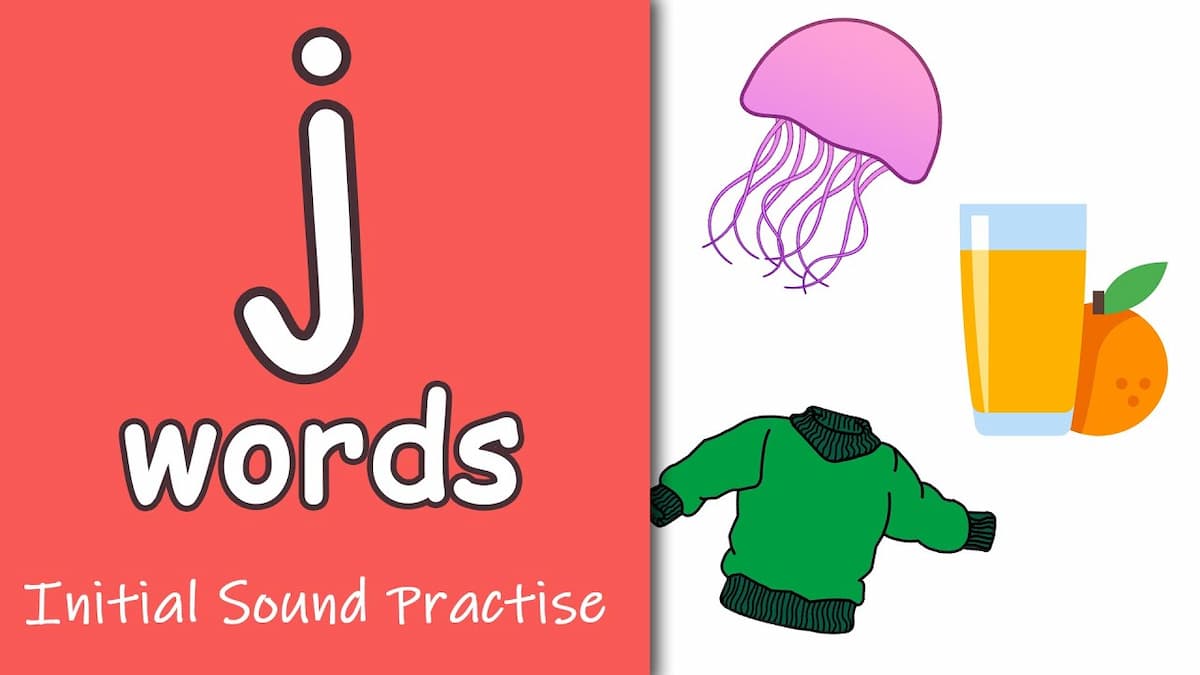
juice
-
jungle
Examples in the middle:
-
enjoy
-
project
Examples at the end:
-
cage
-
edge
Even at the end of words, the /dʒ/ sound should be clearly pronounced.
J Sound vs Similar Sounds (J and CH)
One important part of mastering the pronunciation of J is distinguishing it from similar sounds like /tʃ/ (as in chair).
The key difference is voicing. The J sound /dʒ/ uses voice, while /tʃ/ does not.
Examples:
-
jeep vs cheap
-
joke vs choke
Placing a hand on your throat helps you feel the vibration when pronouncing J.
References: Bounce Patrol - Kids Songs
Common Mistakes with the Pronunciation of J
Many learners struggle with the pronunciation of J by either removing the voice or replacing it with another sound.
Common errors include:
-
Pronouncing job like chop
-
Weakening the /dʒ/ sound at the end of words
-
Confusing jeans with genes
Consistent listening and guided speaking practice reduce these mistakes.
Exercises: Practice the Pronunciation of J
Exercise 1: Identify the J Sound
Decide whether the underlined sound is pronounced /dʒ/.
-
job
-
age
-
jump
-
edge
-
chair
Exercise 2: Choose the Correct Word
Choose the word with the correct J sound.
-
jam / cham
-
jeep / cheap
-
joy / choy
-
cage / cash
Exercise 3: Read the Sentences Aloud
Focus on the pronunciation of J in each sentence.
-
John enjoys drinking juice.
-
The jacket is warm and dry.
-
She changed her job last June.
Answer Key
Exercise 1:
-
Yes
-
Yes
-
Yes
-
Yes
-
No
Exercise 2:
-
jam
-
jeep
-
joy
-
cage
Learn the Pronunciation of J with Monkey Junior and M-Speak
Mastering the pronunciation of J becomes easier with accurate feedback and a clear learning path. Monkey Junior provides structured phonics lessons that guide learners from individual sounds to full sentences.
With M-Speak pronunciation scoring technology, learners receive instant feedback on voicing, mouth position, and sound clarity. This helps learners quickly identify errors and improve pronunciation accuracy.
Monkey Junior also integrates native-speaker audio, listening activities, interactive speaking practice, and multiple learning technologies into one effective system. The step-by-step roadmap ensures steady progress and confident English communication.
Start practicing with Monkey Junior today to improve your pronunciation skills with smart technology and expert guidance.

Conclusion
The pronunciation of J in English is based on the voiced /dʒ/ sound and remains consistent across most words. By understanding how the sound is formed and practicing regularly with Monkey Junior and M-Speak technology, learners can speak English more clearly, confidently, and naturally.